

• Login
UltiDefense: Military Tech Comparisons & Modern Warfare Analysis
  • Defense Systems
    • Air Platforms
      • Fighter Jets
      • Drones
      • Attack Helicopters
      • Strategic Bombers
    • Land Systems
      • Main Battle Tanks
      • Artillery & Firepower
      • Infantry Fighting Vehicles
      • Military Logistics and Support Vehicles
      • Soldier Systems & Robotics: UGV, Exoskeleton, and Modern Infantry Integration
    • Integrated Defense Systems
      • Ballistic Missile Defense
      • Air Defense Systems
    • Missiles & Munitions
      • Air-to-Air & Anti-Ship Missiles
      • Cruise Missiles
      • Strategic & Hypersonic Weapons
    • Naval
      • Aircraft Carriers
      • Submarines
      • Surface Combatants
      • Unmanned Maritime Systems
    • Future Tech & Innovations
      • Sensors and Avionics
  • Comparisons
  • Space Warfare
    • Counter-Space & ASAT
    • Spaceplanes & Launch Vehicles
    • Military Satellites & ISR
  • Defense News
  • Military Life
  • Policy, Budget and Geopolitics
  • Cyber Security & Electronic Warfare
No Result
View All Result
Defense News
No Result
View All Result

Home - Fighter Jets - The Immortal Warbird: Why the F-16 Block 70/72 “Viper” Still Rules the Skies

The Immortal Warbird: Why the F-16 Block 70/72 “Viper” Still Rules the Skies

George Schouten by George Schouten
November 19, 2025
in Fighter Jets
0
A heavily armed F-16 Block 70 Viper fighter jet in flight demonstrating its new AESA radar capabilities.
155
SHARES
1.9k
VIEWS
Share on Twitter

It first flew in 1974. Over 4,600 units have been built. By all logic, the F-16 Fighting Falcon should be a museum piece by now. Instead, it is experiencing the most sophisticated technological transformation in its 50-year history.

Introducing the F-16 Block 70/72 “Viper”—the most advanced variant ever produced by Lockheed Martin. With an international backlog spanning Taiwan, Slovakia, Bahrain, Jordan, and potentially Turkey, the Viper proves an unmistakable truth:

READ ALSO

The Unbeaten King of the Skies: F-15 Eagle, Its 104–0 Record, and Why the F-15EX Still Matters

LCA Tejas Mk-1A: India’s Indigenous 4.5-Gen Fighter & the JF-17 Rival

“You don’t always need stealth to dominate modern air combat—sometimes, you just need smart engineering.”


What Makes the Block 70 “Viper” Special?

The Block 70/72 appears similar to legacy F-16s on the outside, but internally it resembles a mini-F-35. It’s classified as a 4.5-Generation Fighter for one simple reason: It blends proven aerodynamics with fifth-generation avionics and sensors previously found only in stealth aircraft.

The top three upgrades are:

  • AN/APG-83 AESA Radar: A near-F-35 level sensor.
  • 12,000-Hour Service Life: A structural rebuild for the next four decades.
  • Auto GCAS: A lifesaving autonomy system that literally prevents pilot death.

1. The AN/APG-83 AESA Radar — Why It Changes Everything

The Block 70’s most transformative component is the Northrop Grumman AN/APG-83 SABR, an Active Electronically Scanned Array radar.

Why is AESA so important?
Because AESA isn’t “just a better radar.” It fundamentally alters how the F-16 fights, survives, and kills. Instead of a single rotating antenna, AESA uses hundreds of tiny transmit/receive modules to steer radar beams electronically, allowing:

  • Multi-target tracking
  • Instantaneous beam steering
  • Ultra-high resolution synthetic aperture mapping (SAR)
  • Resistance to electronic jamming

This radar is built on core technologies derived from the F-22’s APG-77 and the F-35’s APG-81—meaning the F-16 just inherited two decades of classified sensor development.

Related Analysis:
Curious how these radar systems compare in a head-to-head matchup?
👉 Read our breakdown: F-22 Raptor vs. F-35 Lightning II


2. A 12,000-Hour Airframe — Rebuilding a Classic

Legacy F-16s were built for around 8,000 flight hours. The Block 70 boosts that to 12,000 hours, thanks to reinforced bulkheads and new composite materials.

A Viper purchased today could still be flying in 2060. This makes it the perfect workhorse to patrol airspace and conduct strikes without burning through the expensive flight hours of 5th-gen fleets.


3. Auto GCAS — The System That Saves Lives

The Automatic Ground Collision Avoidance System (Auto GCAS) is one of the most important safety breakthroughs in aviation history.

If the system detects pilot disorientation or G-LOC (loss of consciousness) leading to a crash, it takes control of the aircraft, rolls wings level, and pulls the jet out of a deadly descent. This system is now standard on all new Block 70/72 Vipers.


Why Are Countries Still Buying F-16s in the Stealth Era?

If the world has the F-35, why do nations still buy the F-16 Block 70? Here are the real reasons:

1. Cost Efficiency

The F-16’s Cost Per Flight Hour (CPFH) is less than half that of the F-35. With budget constraints rising, the Viper remains the most affordable high-performance jet on Earth.

2. Export Restrictions

Not all countries are cleared for F-35 acquisition due to political sensitivities or security concerns. The F-16 serves as the perfect “bridge fighter.”

3. “Beast Mode” Payload

Stealth aircraft must hide weapons internally. The Viper has no such limitation. Capable of carrying AIM-120D, JASSM, and Harpoon missiles externally, it can haul 7+ tons of ordnance. In large conflicts, quantity often beats stealth.


How the Viper Fits Into Future Warfare (2030s)

The F-16 Block 70 remains vital because it integrates smoothly with USAF networks and can fly alongside the F-22, F-35, and future platforms like the NGAD (6th Gen Fighter).

While the F-35 handles stealth penetration, the F-16 handles volume, persistence, and rapid availability.

Conclusion: The Legend Evolves

The F-16 Block 70/72 isn’t a nostalgia project. It is a strategic calculation: Combine proven aerodynamics with cutting-edge avionics, boost durability, and add lifesaving autonomy.

Stealth aircraft may define the future, but the Viper still rules the present—and it will continue to do so well into the 2050s.
Tags: AESA RadarDefense TechnologyF-16 ViperLockheed MartinModern Air CombatUSAF

Related Posts

F-15 Eagle fighter jet flying over clouds at sunset with full weapon loadout
Fighter Jets

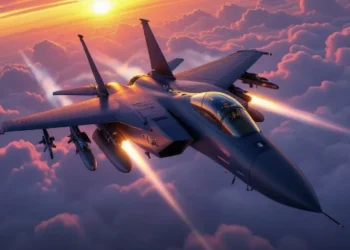
The Unbeaten King of the Skies: F-15 Eagle, Its 104–0 Record, and Why the F-15EX Still Matters

December 20, 2025
Indian Air Force LCA Tejas Mk-1A fighter jet soaring over the Himalayas, armed with indigenous Astra BVR missiles and equipped with an AESA radar nose cone.
Comparisons

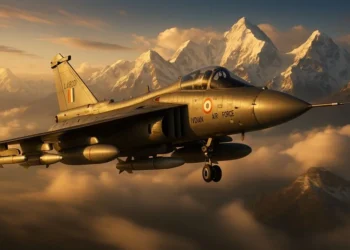
LCA Tejas Mk-1A: India’s Indigenous 4.5-Gen Fighter & the JF-17 Rival

December 14, 2025
Saab Gripen E fighter jet being rearmed on a snowy highway base by ground crew
Fighter Jets

Saab JAS 39 Gripen E: Why the World’s “Guerrilla Fighter” Might Be the Smartest Jet of 2025

December 10, 2025
Chengdu J-20 Mighty Dragon stealth fighter flying over ocean showcasing canard delta wing configuration
Fighter Jets

Chengdu J-20 Mighty Dragon: Paper Tiger or 5th-Gen Monster?

December 9, 2025
High-altitude view of a Pakistan Air Force JF-17 Thunder Block 3 fighter jet executing a banking maneuver. The image clearly details the stealthy Diverterless Supersonic Inlets (DSI) and a full payload of PL-15 long-range BVR missiles under the wings, highlighting its 4.5-generation capabilities.
Fighter Jets

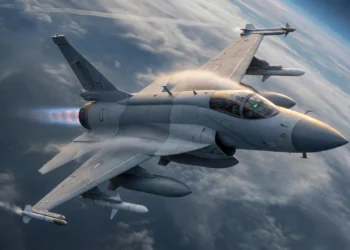
JF-17 Thunder Block 3: The “Poor Man’s F-35” Shattering the F-16 and Rafale Hierarchy

December 8, 2025
Concept art of the USAF NGAD 6th generation fighter jet flying alongside autonomous drone wingmen.
Fighter Jets

What Is NGAD? Inside the USAF’s Secret 6th Generation Fighter Program

November 19, 2025
Next Post
Close-up view of the Northrop Grumman AN/APG-83 SABR AESA radar antenna array showing solid-state transmit/receive modules.

AN/APG-83 SABR: The AESA Radar Revolutionizing 4th-Gen Fighters

Leave a Reply Cancel reply

Your email address will not be published. Required fields are marked *

About

Ultidefense is a digital platform focused on modern defense, military technology, and strategic innovation.
We explore how advancements in aerospace, AI, cybersecurity, and autonomous systems are transforming the global defense landscape.
Our mission is to connect technical insight with strategic awareness, helping readers understand the technologies shaping modern security and warfare.
At Ultidefense, we believe knowledge is strength — and our goal is to deliver clear, factual, and forward-looking analysis on the systems, science, and strategies defining the future of defense.

Categories

  • Comparisons
  • Cyber Security & Electronic Warfare
  • Defense News
  • Defense Systems
    • Air Platforms
      • Attack Helicopters
      • Fighter Jets
      • Global Military Drones: UAV Systems, Autonomy, and Unmanned Warfare
      • Strategic Bombers
    • Future Tech & Innovations
      • Sensors and Avionics
    • Land Systems
      • Artillery & Firepower: Self-Propelled Guns, Rocket Systems, and Barrage Analysis
      • Main Battle Tanks: Armor, Firepower, and Modern MBT Comparisons
    • Missiles & Munitions
      • Strategic & Hypersonic Weapons
    • Space Warfare
      • Military Satellites & ISR
      • Spaceplanes & Launch Vehicles
  • Integrated Defense Systems
    • Air Defense Systems
  • Military Life
  • Naval Systems: Warships, Carriers, and Maritime Defense Technology
    • Aircraft Carriers
    • Submarines
  • Policy, Budget and Geopolitics
  • Unmanned Maritime Systems

Recent Posts

  • Which Military Boot Camp is the Hardest? All 6 US Branches Ranked
  • The SFAS Fallout: What Happens After You Fail Special Forces Selection
  • The Algorithm of War:The Anatomy of Conflict in 2050
  • Russia’s Avangard HGV: Breaking the Shield of Global Missile Defense

Newsletter

Pages

  • About Us
  • Home
  • Contact Us
  • Privacy Policies
  • Terms of Service
  • Disclaimer

© 2025 Defense Systems

Welcome Back!

Login to your account below

Forgotten Password?

Retrieve your password

Please enter your username or email address to reset your password.

Log In
No Result
View All Result
  • Defense Systems
    • Air Platforms
      • Fighter Jets
      • Drones
      • Attack Helicopters
      • Strategic Bombers
    • Land Systems
      • Main Battle Tanks
      • Artillery & Firepower
      • Infantry Fighting Vehicles
      • Military Logistics and Support Vehicles
      • Soldier Systems & Robotics: UGV, Exoskeleton, and Modern Infantry Integration
    • Integrated Defense Systems
      • Ballistic Missile Defense
      • Air Defense Systems
    • Missiles & Munitions
      • Air-to-Air & Anti-Ship Missiles
      • Cruise Missiles
      • Strategic & Hypersonic Weapons
    • Naval
      • Aircraft Carriers
      • Submarines
      • Surface Combatants
      • Unmanned Maritime Systems
    • Future Tech & Innovations
      • Sensors and Avionics
  • Comparisons
  • Space Warfare
    • Counter-Space & ASAT
    • Spaceplanes & Launch Vehicles
    • Military Satellites & ISR
  • Defense News
  • Military Life
  • Policy, Budget and Geopolitics
  • Cyber Security & Electronic Warfare

© 2025 Defense Systems