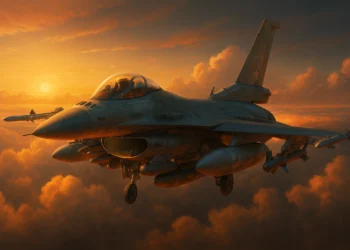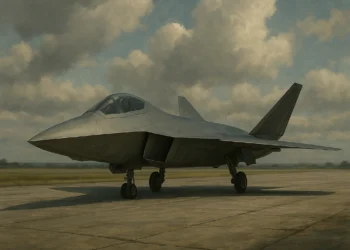


In an era dominated by trillion-dollar programs and stealth-centric doctrines, one fighter jet dares to ask a fundamental question:
Do you really need a flying supercomputer to defend your homeland?
Enter the Saab Gripen E—the world’s first true “Guerrilla Fighter.”
It isn’t the fastest. It isn’t the stealthiest. But it might just be the smartest.
Designed by Sweden to counter a much larger Russian Air Force without bankrupting the country, the Gripen follows a simple but lethal philosophy: “Disperse. Survive. Kill.”
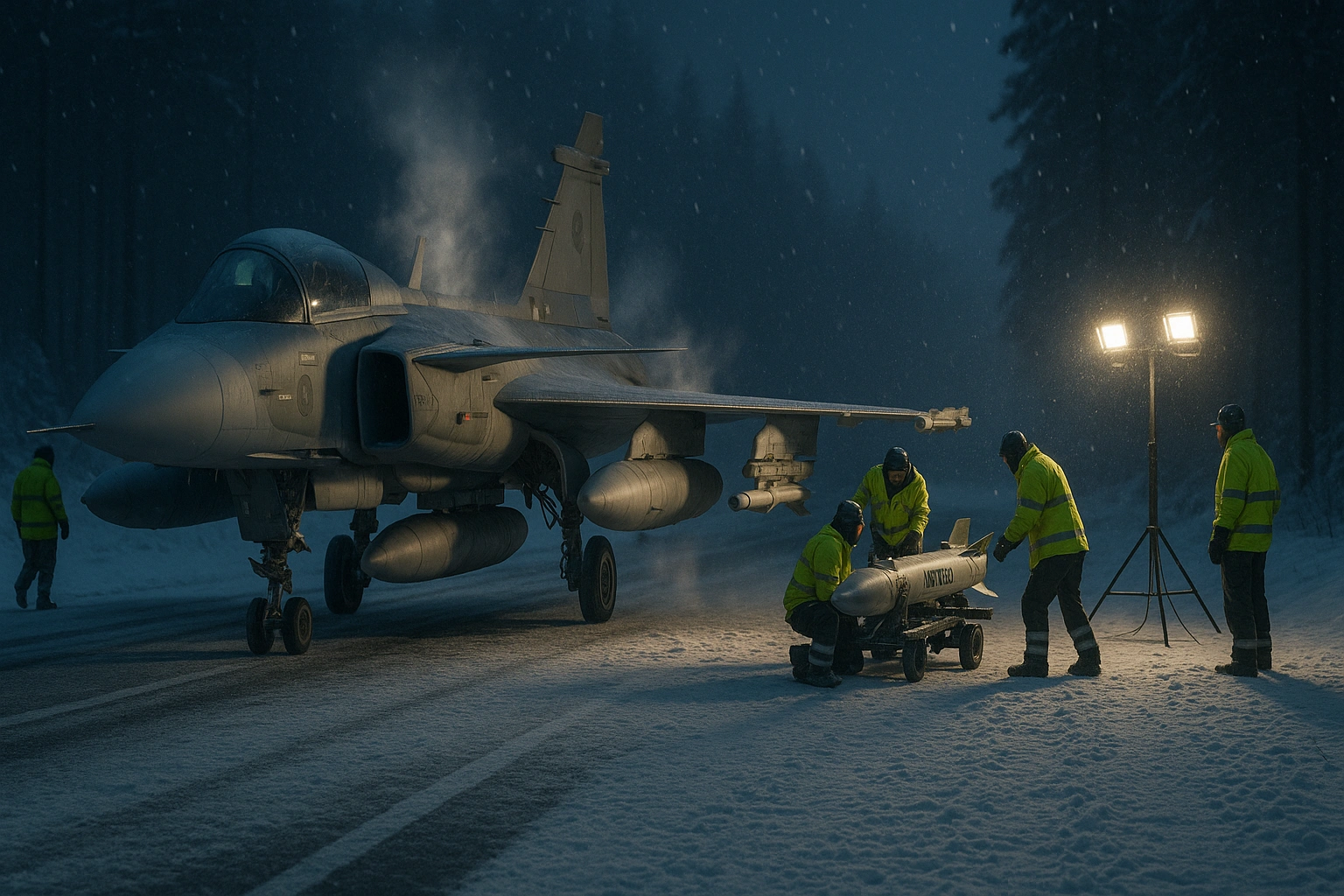
While an F-35 requires pristine runways and climate-controlled hangars, the Gripen can land on an icy highway, rearm in under 10 minutes, and launch a Meteor missile before the enemy even realizes where it went.
This UltiDefense analysis examines why the underdog of the skies is one of the deadliest defensive tools in modern air warfare.
Technical Specifications: The Efficiency Beast
| Feature | Saab JAS 39 Gripen E |
| Role | Multi-Role Light Fighter |
| Engine | 1× GE F414-GE-39E (Super Hornet family) |
| Max Speed | Mach 2.0 (Supercruise capable) |
| Radar | Raven ES-05 AESA (Swashplate, 100° FoV) |
| Combat Radius | ~1,500 km |
| Turnaround Time | < 10 minutes (6 technicians) |
| Runway Requirement | 800 meters (Highway capable) |
| Flight Hour Cost | $8,000 – $12,000 |
| Key Weapon | MBDA Meteor (Long-range BVR) |
| Electronic Warfare | Arexis EW Suite (GaN DRFM Jammer) |
1. The Road-Base Doctrine: Survive to Fight
Most fighter fleets collapse once their main airbase is destroyed. The Gripen does not.
The Highway Fighter
The Gripen is specifically engineered to operate from straight 800-meter sections of public roads—often hidden within forests or civilian infrastructure.1
10-Minute Turnaround
A single technician + five conscripts (trained for just 10 weeks) can:
Refuel
Reload Meteor + IRIS-T missiles
- Perform full system checks
…in under 10 minutes, sometimes with the engine still running.
The Strategic Logic: While enemy ballistic missiles flatten traditional airbases, Sweden’s air force dissolves into the countryside. Every road becomes a runway. Every forest becomes an airbase. This is survivability through dispersed operations—a doctrine NATO is now trying to copy.
2. Electronic Warfare: Sweden’s “Digital Stealth”
The Gripen isn’t physically stealthy like the F-35, but that doesn’t mean it’s visible. The Arexis EW suite is one of the most advanced jamming systems ever installed on a fighter of this size.2
Arexis: The Invisible Shield
Ultra-wideband DRFM jamming
GaN amplifiers for extremely high power output
Ability to blind enemy radars or create false targets
The Philosophy: “I don’t need to be invisible if you can’t lock onto me.”
This is digital survivability, and in modern electronic warfare, it often matters more than physical shaping.
3. The Claws: Meteor Missiles & the Swashplate Radar
Don’t let the Gripen’s small size fool you. It is a long-range sniper.
The Radar Advantage
Unlike fixed AESA radars (F-22, F-35), the Gripen’s Raven ES-05 is mounted on a swashplate, allowing mechanical movement.3
100° field of view
Ability to track targets while beaming away (flying 90 degrees to the threat).
Reduced exposure during missile guidance.
The Meteor: The No-Escape Monster
With an estimated No-Escape Zone of 60–80 km (3× larger than early AIM-120s) and a Ramjet engine, the Meteor sustains energy even in the terminal phase. In BVR combat, energy wins—and the Gripen carries the best stick in the yard.
4. The Economic Reality: David vs. Goliath
Here is why nations like Brazil picked Gripen over the Rafale and Super Hornet.
Unit Cost: Approx. $85 million (often includes massive technology transfer).
Cost per Flight Hour:
F-35A → $35,000+
Eurofighter → $50,000+
Gripen E → $8,000 – $12,000
The Real Impact: Lower operational costs allow for 3× more flight hours, better pilot training, and higher fleet readiness. In a real war, pilot proficiency beats raw specs on paper.
5. Weaknesses of the Gripen E (Honest Assessment)
To ensure a balanced and authoritative analysis, we must address the limitations of the platform:
No Internal Weapons Bay: This results in a higher Radar Cross Section (RCS) compared to 5th-gen fighters like the F-35.
Payload Limitations: As a light fighter, it has a lower maximum payload than heavy hitters like the F-15EX or Su-35.
Fleet Size: With smaller production numbers, it lacks the massive “economies of scale” logistics network of the F-35 program.
Engine Dependency: It relies on U.S. export licenses for the GE F414 engine, which can be a geopolitical factor.4
Conclusion: The Rational Fighter
The Gripen E is not the most powerful fighter in the world.
The F-22 is faster. The F-35 is stealthier. The Su-35 carries more missiles.
But the Gripen E may be the best defensive fighter ever built.
It is the perfect jet for a country facing a larger enemy, limited budgets, harsh weather, and the threat of damaged runways.
It’s not a Ferrari. It’s a Rally Car.
And in a dirty war, you want the Rally Car.
❓ FAQ: Saab Gripen E
Q: Is the Gripen E stealth?
A: Not in the VLO (Very Low Observable) sense. Its small size and composite materials reduce its RCS, but its survivability comes from advanced Electronic Warfare (jamming), not physical shaping.
Q: Can the Gripen land on highways?
A: Yes. It is designed for 16m wide, 800m long straight road sections—even in severe winter conditions with snow and ice.
Q: Why did Brazil choose the Gripen?
A: Sovereignty. Saab offered full technology transfer, source code access, and domestic production in Brazil—something neither Dassault (France) nor Boeing (USA) fully agreed to.
💬 Join the Discussion
Is stealth overrated? Would you rather field a fleet of expensive invisible jets or a swarm of rugged “guerrilla fighters”?
Comment below: Team High-Tech 🇺🇸 or Team Smart-Tech 🇸🇪?