


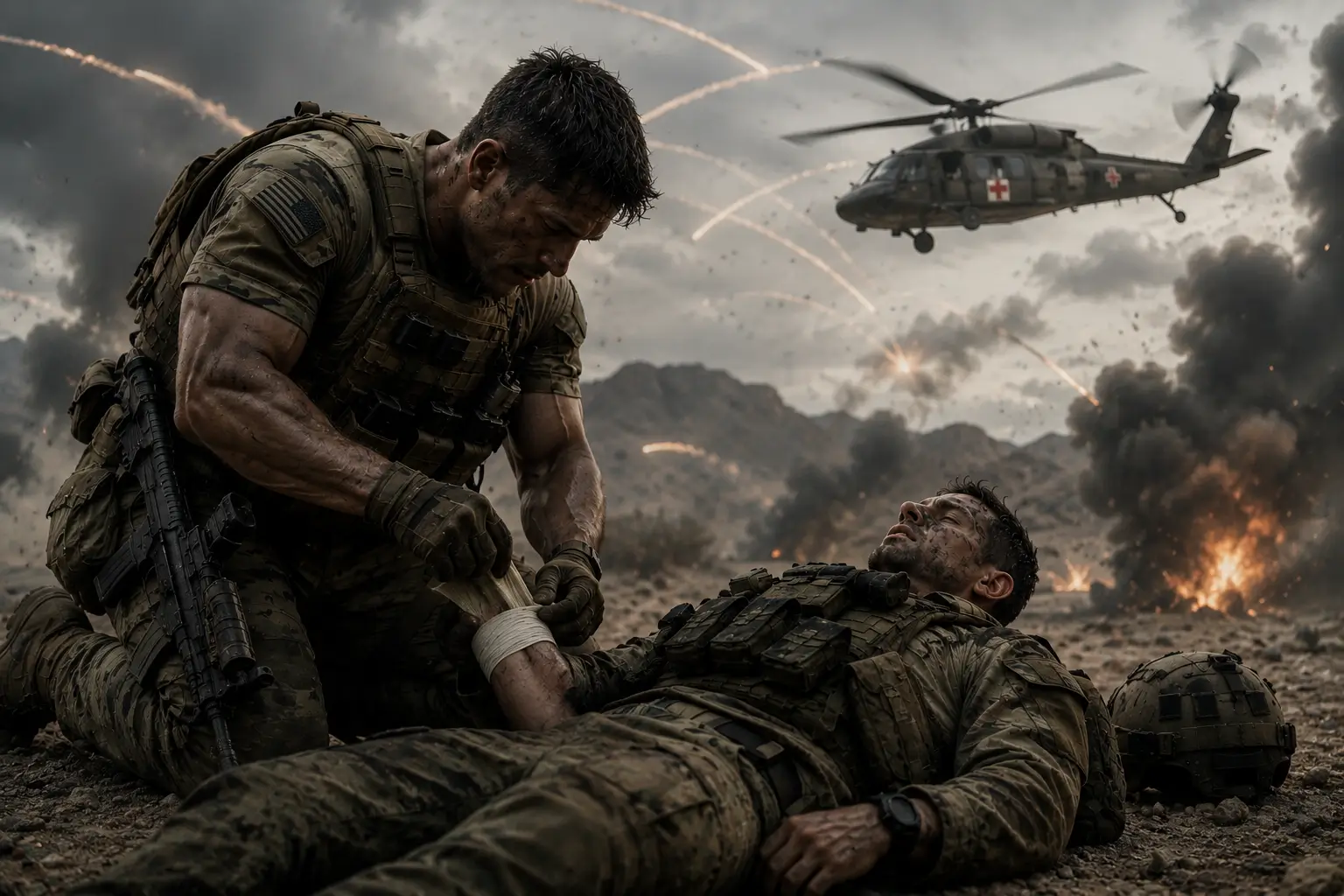
The civilian perception of modern warfare is largely a product of high-definition fiction. Popular media has conditioned the public to believe that combat is primarily an intimate, precise affair—a sequence of close-quarters firefights determined by rifle marksmanship and individual tactical heroism.
As someone who has spent over three decades planning joint operations, commanding units, and analyzing casualty manifests at the theater level, I can state objectively that this narrative fundamentally distorts the reality of conventional warfare.
On high-intensity modern battlefields, bullets are often secondary to the far greater lethality of artillery, fragmentation, uncrewed aerial systems (UAS), and delayed medical evacuation. Modern large-scale combat operations (LSCO) do not kill through precision; they kill through system failure, catastrophic physiological hemorrhaging, logistical latency, and the overwhelming physics of indirect fire.
To understand combat mortality from an operational and medical standpoint, one must look past the infantry rifle and analyze the brutal mechanics of weapon effects, casualty chains, and the structural limitations of battlefield trauma care.
What is the leading cause of death on the modern battlefield? The leading causes of death on the modern battlefield are artillery fragmentation, uncontrolled bleeding, blast injuries, and delayed medical evacuation. In large-scale conventional wars, indirect fire systems such as artillery, rockets, mortars, and drone-guided strikes cause the majority of combat casualties.
The Biggest Myth About Combat Death
The persistent focus on the infantry small-arms duel as the primary driver of combat mortality miscalculates the strategic and tactical nature of modern engagement. Statistically, gunshot wounds (GSWs) represent a relatively low percentage of overall fatalities in conventional, symmetric warfare.
While small arms remain dominant in urban operations, close-quarters battles (CQB), counterinsurgency (COIN), and low-intensity asymmetric conflicts, their role changes dramatically in large-scale combat against a peer adversary.
In symmetric warfare, small arms are primarily utilized as tools of suppression, maneuver, and containment. The operational purpose of direct small-arms fire is frequently to pin a maneuvering element in place, denying them mobility and forcing them to seek cover.
Once the target is fixed, the adversary brings heavier, systemic assets—such as field artillery or mortar matrices—to bear. Consequently, surviving the opening minutes of an ambush is rarely a matter of superior marksmanship; it is a race against the enemy’s ability to calculate grid coordinates and execute a synchronized fire mission.
Why Artillery Causes Most Battlefield Casualties
There is an established operational axiom among senior commanders: “Infantry wins battles, logistics wins wars, but artillery does the killing.” Historical data and contemporary conflict analyses confirm that indirect fire remains the premier instrument of battlefield lethality.
Modern warfare increasingly rewards the side that can sustain casualty replacement, ammunition throughput, and medical evacuation under continuous surveillance pressure.
- Historical Context: During the First and Second World Wars, military medical records indicated that indirect fire systems caused between 60% and 70% of all combat casualties.
- Contemporary Asymmetry: In the high-intensity, symmetric trench and urban attrition warfare observed in Eastern Europe, recent defense assessments indicate that artillery, rocket systems (such as MLRS), and mortar fire account for up to 70% to 80% of total casualties (both Killed in Action [KIA] and Wounded in Action [WIA]).
The return to heavy trench warfare has highlighted a critical lesson for modern planners: field fortifications mitigate direct fire effectively, but they significantly concentrate the target area for sustained indirect saturation. When an operational sector is subjected to thousands of high-explosive rounds daily, the survivability of infantry depends less on individual tactical proficiency and more on the structural integrity of overhead cover and the efficiency of counter-battery systems.
How Fragmentation Actually Kills
The physical mechanism of an artillery-inflicted death differs fundamentally from that of a small-arms injury. A standard rifle bullet produces a relatively predictable permanent cavity along a distinct trajectory determined by its caliber, velocity, and tumbling characteristics. Conversely, a high-explosive (HE) artillery projectile kills through the chaotic, multi-directional dispersion of supersonic fragmentation.
Upon detonation, the steel casing of a 155mm or 122mm artillery shell shatters into thousands of jagged, irregular fragments traveling at velocities exceeding 3,000 feet per second. These fragments do not produce clean penetration tracks. They cause extensive soft-tissue disruption, avulse entire muscle groups, and shear through major skeletal structures.
From a trauma perspective, fragmentation wounds pose an extreme challenge to combat medics due to their multiplicity. A single shell blast can pepper a soldier with dozens of micro-fragments simultaneously. Even if the individual’s soft body armor and ballistic plates protect vital thoracic organs, unarmored zones—such as the inguinal region, axilla, and extremities—remain highly vulnerable to catastrophic arterial lacerations.
Blast Overpressure and Invisible Injuries
Even when a soldier is positioned inside a reinforced bunker or an armored fighting vehicle that successfully deflects shrapnel, the kinetic energy of an explosion can still prove fatal. This lethal mechanism is governed by blast overpressure—the rapid, violent compression and subsequent expansion of the surrounding atmosphere.
To systematically evaluate these non-fragmentation injuries, military medicine categorizes blast trauma into distinct phases. Understanding these mechanisms is vital for accurate battlefield triage and treatment.
The Three Primary Categories of Blast Injury
1. Primary Blast Injury
These injuries are caused exclusively by the direct impact of the blast overpressure wave traveling through the body. The physical damage occurs almost entirely at air-tissue interfaces within hollow or fluid-filled organs.
- Blast Lung (Pulmonary Barotrauma): The overpressure wave ruptures the delicate alveolar-capillary membranes, leading to massive internal hemorrhage, air embolism, and acute respiratory failure.
- Gastrointestinal Perforation: The sudden pressure differential causes immediate shearing and tearing of the intestinal walls.
- Auditory Damage: Rupture of the tympanic membrane and disruption of the ossicular chain, causing immediate disorientation.
2. Secondary Blast Injury
This category encompasses injuries resulting from flying debris, shrapnel, and structural fragments propelled by the blast wind. This is the stage where the aforementioned high-velocity fragmentation interacts with the human body, causing penetrating trauma and lacerations.
3. Tertiary Blast Injury
These injuries occur when the physical blast wind forces the soldier’s body into motion, projecting them against solid objects such as bulkhead walls, ground terrain, or vehicle interiors. The medical results are typical of high-velocity blunt-force trauma: skull fractures, spinal column transitions, and traumatic closed-glove amputations.
In modern peer-to-peer warfare, Concussive Traumatic Brain Injury (TBI) stemming from primary and tertiary blast mechanisms has emerged as a pervasive, often invisible threat. The rapid acceleration-deceleration of the brain tissue within the cranium causes diffuse axonal injury (DAI).
Soldiers may present no external signs of physical trauma yet suffer immediate cognitive collapse, loss of situational awareness, and subsequent systemic shock, rendering them incapable of executing basic survival or self-care protocols.
Why Massive Hemorrhage Is Still the #1 Preventable Killer
While an artillery strike or a fragmentation event represents the initial kinetic trigger, the immediate physiological cause of death for the majority of casualties who survive the first few seconds is massive hemorrhage. Military trauma studies have consistently shown that uncontrolled hemorrhage remains one of the leading causes of potentially preventable battlefield death.
When high-velocity fragmentation or a direct gunshot severs a major arterial corridor—such as the femoral, axillary, or carotid arteries—the human body enters a rapid downward spiral. Arterial bleeding under normal physiological pressure can cause complete volume depletion and irreversible hypovolemic shock within minutes if left unmanaged.
As blood volume drops, oxygen delivery to vital tissues and organs ceases, forcing the body into anaerobic metabolism. If the bleeding is non-compressible—meaning it occurs within the pelvic cavity, torso, or junctional zones—the survival window narrows significantly, demanding immediate advanced intervention.
[Arterial Transection] ──> [Rapid Volume Depletion] ──> [Hypovolemic Shock] ──> [Systemic Collapse]
The MARCH Protocol and Tactical Survival
The tactical evolution of modern combat medicine was driven by the universal codification of Tactical Combat Casualty Care (TCCC). This framework replaced older, civilian-centric first aid models with a strict prioritized sequence known as the MARCH algorithm:
- M – Massive Hemorrhage: Immediate application of extremity tourniquets and hemostatic dressings within the opening seconds of engagement.
- A – Airway: Securing patency via nasopharyngeal airways or advanced surgical interventions like cricothyroidotomy.
- R – Respiration: Treating open pneumothorax (sucking chest wounds) with occlusive chest seals and decompressing tension pneumothorax.
- C – Circulation: Re-evaluating prior tourniquets, establishing intravenous or intraosseous access, and initiating whole blood transfusions.
- H – Hypothermia/Head: Preventing the triad of death by managing body temperature and identifying traumatic brain injuries.
The widespread distribution of high-quality tourniquets has significantly increased initial survival rates on the modern battlefield. However, a tourniquet is merely a temporary physiological dam designed to buy time; if it is not followed by rapid surgical intervention, systemic mortality remains inevitable.
Why Survivable Wounds Become Fatal
Modern warfare is increasingly defined not only by how soldiers are wounded, but by how difficult it has become to rescue them afterward. A significant percentage of combat mortality occurs after patients have successfully survived the initial kinetic blast and received basic tactical field care.
When a casualty is stabilized but cannot be moved, the human body begins to fight a secondary battle against its own physiology. Prolonged exposure to the elements, combined with blood loss, triggers the “trauma triad of death”: hypothermia, acidosis, and coagulopathy.
As the body temperature drops, the chemical reactions required to form blood clots fail, causing the patient to bleed through previously stable wounds. Without rapid access to a surgical suite to repair internal non-compressible hemorrhages, the initial stabilization achieved by field medics eventually collapses.
Furthermore, the lack of immediate access to fresh whole blood products at the forward edge of the battle area (FEBA) accelerates irreversible hemorrhagic shock. Survivable wounds turn fatal because the logistical architecture required to sustain life over extended periods is under continuous interdiction.
Why do soldiers die after surviving explosions? Many soldiers survive the initial blast but later die from uncontrolled bleeding, airway collapse, blast lung injuries, delayed evacuation, or a lack of surgical access within the critical treatment window.
The Golden Hour: Why Evacuation Speed Matters
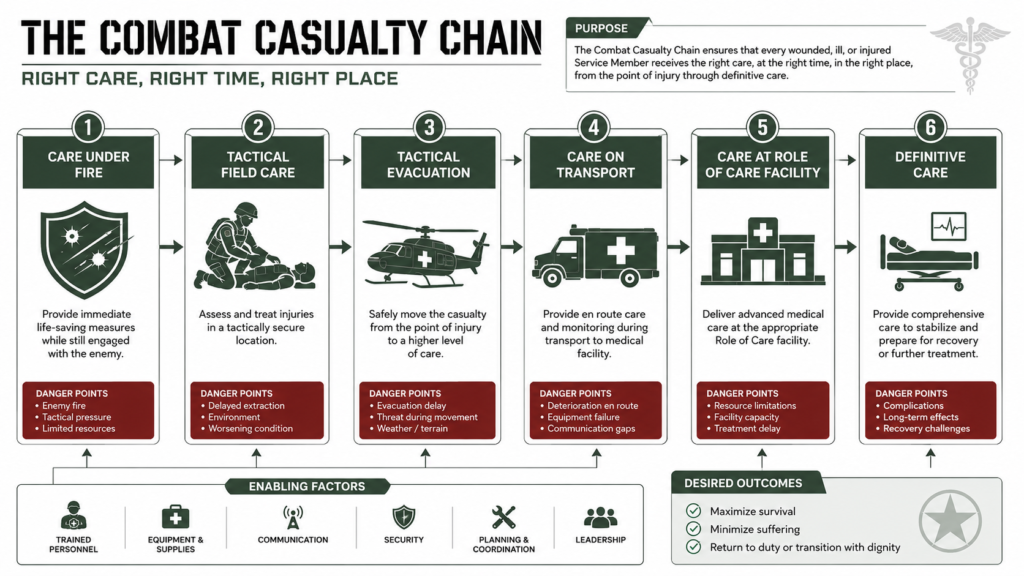
The concept of the Golden Hour became a foundational principle of modern combat trauma systems. It dictates that a critically wounded soldier’s chances of survival increase exponentially if they can reach definitive damage-control surgery within 60 minutes of the initial injury.
CASEVAC vs. MEDEVAC: The Critical Distinction
Operational clarity requires distinguishing between the two primary modes of battlefield tactical evacuation:
- MEDEVAC (Medical Evacuation): Utilizes dedicated medical platforms staffed by specialized en-route care personnel, such as flight medics. These vehicles are protected under the Geneva Convention and contain advanced life-support equipment capable of continuing resuscitation during transit.
- CASEVAC (Casualty Evacuation): Utilizes non-medical, opportunistic tactical platforms—such as standard infantry fighting vehicles (IFVs), supply trucks, or utility helicopters. These platforms lack specialized medical suites and rely entirely on the organic equipment of the accompanying troops.
The Catastrophic Collapse of the Evacuation Chain
During recent asymmetric counterinsurgency campaigns, Western militaries enjoyed uncontested air supremacy. A wounded soldier could expect a MEDEVAC helicopter to land within minutes of a call, flying them directly to a theater hospital. This system pushed survival rates for wounded personnel to historic highs.
In a large-scale, peer-to-peer conventional conflict, that level of evacuation dominance is completely gone. Against an adversary equipped with integrated air defense systems (IADS) and long-range electronic warfare arrays, flying standard rotary-wing assets to the frontline is untenable.
Air evacuation is effectively denied, forcing the entire casualty extraction chain to shift toward slower, ground-based, and highly improvised CASEVAC methods.
How Drones Changed Battlefield Mortality
The proliferation of uncrewed aerial systems (UAS) and First-Person View (FPV) loitering munitions has structurally altered tactical extraction. Drones have turned the physical rescue of wounded soldiers into an exceptionally high-risk operation for frontline units.
Recent battlefield data and operational reporting from high-intensity conventional conflicts suggest that evacuation teams are increasingly targeted by FPV drones during casualty extraction attempts. The traditional assumption of a semi-secure tactical rear has been invalidated by persistent aerial surveillance.
When an infantry squad attempts to evacuate a casualty on a litter, their movement profile makes them a high-visibility target. Opposing forces frequently utilize initial casualties as an operational anchor, targeting the arriving litter bearers, medics, and ground vehicles to compound force attrition.
Evacuation Latency and Prolonged Field Care (PFC)
Because daytime movement under constant UAS surveillance is unsustainable without severe loss, commanders are routinely forced to delay casualty transit until nightfall or optimal weather conditions occur. This has extended evacuation latency from the idealized 60 minutes to windows spanning 12 to 36 hours.
This paradigm shift forces a complete change in military medical doctrine, moving away from rapid evacuation and toward Prolonged Field Care (PFC). Line medics, whose training traditionally emphasized short-term stabilization, are now required to manage complex polytrauma for days inside isolated fighting positions.
Soldiers who survive the initial artillery blast are now succumbing to secondary complications, wound contamination, or systemic shock hours after the event, simply because the tactical environment prevents physical movement across the lethal final kilometers of the combat zone.
Blast Injuries and Traumatic Brain Damage
While fragmentation represents the physical penetration of steel into tissue, the detonation of modern high-explosive munitions inflicts a parallel vector of trauma that is often internal and invisible: blast overpressure. This phenomenon is particularly destructive in enclosed defensive sectors, such as trenches, bunkers, and urban basements.
The kinetic energy transferred by a primary blast wave travels through the human body at supersonic speeds, seeking air-tissue interfaces. The sudden, violent compression followed by a rapid negative pressure phase causes structural disruption at the cellular level, leading to immediate physiological compromise.
The Mechanism of Blast-Induced TBI
In modern high-intensity warfare, concussive Traumatic Brain Injury (TBI) has become an increasingly significant source of operational degradation. The physical damage is not dependent on shrapnel breaching the helmet.
Instead, blast overpressure is believed to contribute to diffuse axonal and microvascular injury through rapid pressure transmission and acceleration forces. The rapid pressure differential shifts fluid columns within the vascular tree, transferring kinetic stress directly into the cerebral cortex. The clinical manifestations are immediate and highly detrimental to unit survival:
- Acute cognitive collapse, spatial disorientation, and temporary retrograde amnesia.
- Loss of fine motor coordination and severe vestibular impairment.
- A complete breakdown in the ability to process orders or execute self-care protocols.
A soldier suffering from acute blast-induced TBI effectively becomes an operational non-combatant. They are physically incapable of applying a tourniquet, locating defilade, or maintaining a defensive posture.
Furthermore, the psychological exhaustion generated by continuous exposure to overpressure breaks unit cohesion far faster than direct small-arms engagements, precipitating rapid combat stress reactions across entire maneuvering elements.
Hypothermia: The Silent Battlefield Killer
One of the most critical errors in civilian interpretations of combat trauma is the assumption that environmental casualties are separate from kinetic injuries. In military medicine, hypothermia is recognized as a direct catalyst for trauma mortality, acting as a silent physiological killer that operates long after the initial blast.
The physiologic reality is that a wounded soldier loses the ability to regulate core body temperature almost immediately following significant blood loss. As hypovolemic shock develops, peripheral vasoconstriction shunts remaining blood volume toward central organs, leaving the extremities and skin highly susceptible to rapid cooling.
Why Trauma Patients Bleed More As They Get Colder
Hypothermia is dangerous because it directly compromises the body’s metabolic and hematological mechanisms. When a casualty’s core temperature drops below 95°F (35°C), the enzyme cascade required to initiate blood clotting becomes severely impaired.
This triggers the lethal loop known as the Trauma Triad of Death:
As hypothermia deepens, metabolic acidosis accelerates due to poor tissue perfusion and anaerobic glycolysis. This dual state of cold and acidity severely inhibits coagulation factors and platelet function.
Even in warm summer environments or temperate climates, a soldier laying on the damp ground in hemorrhagic shock can rapidly develop this coagulopathic state. If the tactical field care environment lacks active chemical heating blankets, the patient will bleed to death through injuries that were previously controlled by mechanical tourniquets.
Combat Medics: The System Designed to Delay Death
On the modern battlefield, the role of the combat medic or line medic is fundamentally misunderstood. Medics do not cure wounds; they manage a countdown timer. Their entire operational utility is built around delaying systemic death long enough for advanced surgical assets to intervene.
Under the current constraints of extended evacuation latency, the burden placed on these individuals has increased exponentially. Medics who were traditionally trained to sustain a patient for minutes are now forced to operate as long-term care providers in highly compromised tactical environments.
The Limits of Prolonged Field Care (PFC)
When uncrewed aerial systems (UAS) and indirect fire completely deny physical transit lines, the combat medic must manage complex poly-trauma for hours, or even days, with a finite kit. This shift introduces severe clinical and logistical crises:
- Depletion of Consumables: Advanced hemostatic agents, chest seals, and automated tourniquet replacements are rapidly exhausted within the first few hours of a mass-casualty event.
- Fluid Resuscitation Limitations: Managing hemorrhagic shock without access to stored whole blood products forces a reliance on limited freeze-dried plasma or high-risk “walking blood banks” within the platoon.
- Infection Management: Wounds caused by dirty artillery fragmentation in muddy trenches deteriorate rapidly into systemic sepsis if definitive surgical debridement is delayed beyond the standard window.
Armor Protects the Torso, Not the Casualty Chain
The rapid advancement of individual protective equipment (IPE)—including heavy ceramic ballistic plates, modular side armor, and advanced combat helmets—has saved thousands of lives from direct chest penetrations and low-velocity fragments. However, armor cannot alter the laws of physics or solve the broader challenge of survivability.
Modern body armor functions by absorbing and distributing the kinetic energy of an incoming projectile across a wider surface area. While this prevents fragmentation from penetrating the thoracic cavity, the severe blunt-force trauma transferred to the body wall can still cause significant internal damage, most notably pulmonary contusions that severely impair oxygenation.
Furthermore, increased armor weight severely limits mobility. In dynamic operational environments where survival depends on sprinting across open danger areas or diving into defilade to escape incoming FPV drones, the physical exhaustion induced by heavy protective gear increases a soldier’s vulnerability.
Modern armor protects the torso, but it leaves critical neck, groin, and axillary gaps exposed to multi-directional fragmentation, and it does nothing to mitigate the system failures that occur when a wounded soldier cannot be evacuated.
The Future of Battlefield Survival
As the contemporary operational environment continues to demonstrate the fragility of traditional evacuation architecture, military research centers are pivoting toward automated and decentralized survival technologies to bridge the evacuation gap:
- Autonomous CASEVAC Drones: Low-profile, heavy-lift uncrewed ground vehicles (UGVs) and automated vertical take-off and landing (VTOL) aircraft designed to extract casualties without risking human litter bearers under persistent surveillance.
- Wearable Biosensor Networks: Integrated combat uniforms equipped with physiological sensors that automatically transmit triage data, injury signatures, and exact GPS coordinates to tactical operation centers to optimize remote triage.
- Smart Tourniquets and Automated Hemostasis: Mechanical occlusion systems capable of monitoring arterial pressure and dynamically adjusting compression to preserve limb tissue during prolonged field care.
The Historical Evolution of Battlefield Mortality
To understand why modern survivability systems are collapsing, one must look at how the relationship between weapons technology and medical evacuation has evolved over the last century.
| Era / Conflict | Dominant Kinetic Vector | Primary Medical Breakthrough | Evacuation Profile |
| World War I | Field Artillery / Gas | Antiseptics & Splints | Slower, ground-based, high mortality from infection. |
| Vietnam War | Small Arms / Shrapnel | Helicopter Evacuation | The birth of the helicopter evacuation revolution; rapid transit. |
| Iraq & Afghanistan | IEDs / Small Arms | TCCC & Universal Tourniquets | Near-total air supremacy; reliable transit within the Golden Hour. |
| Modern Peer Conflicts | UAS & Precise Artillery | Prolonged Field Care (PFC) | Denied air medical evacuation; extended ground latency (12–36 hours). |
his historical trajectory reveals a critical operational reality: military medicine has shifted from a race against infection (WWI) to a race against time (Vietnam/Iraq), and finally to the modern challenge of holding ground against systemic isolation (Ukraine).
Final Analysis: Modern War Kills Through Systems, Not Just Weapons
Ultimately, the answer to what kills soldiers on the modern battlefield cannot be reduced to a specific weapon system, caliber, or payload. Modern warfare kills through system overload
Death in combat occurs when the adversary successfully synchronizes kinetic effects, aerial surveillance, and terrain interdiction to sever the tactical casualty chain. When the Golden Hour is disrupted, when blood products cannot reach the front, and when medics are forced into prolonged isolation, survivable wounds inevitably become fatal.
In modern war, survival is no longer determined solely by armor, courage, or marksmanship. It is determined by whether an entire medical and logistical system can continue functioning under constant surveillance, fragmentation, and time pressure.
Key Takeaways
- Indirect Fire Dominance: Contemporary large-scale conventional warfare indicates that artillery, mortars, and rocket fragmentation remain the dominant source of total combat casualties.
- The Hemorrhage Priority: Massive, uncontrolled bleeding is the leading cause of potentially preventable death for personnel surviving the initial blast effects.
- Evacuation Denial Threat: Persistent drone surveillance and air-denial environments have extended casualty transit times well beyond the idealized Golden Hour window.
- The Trauma Cascade: Combat survival is dependent on preventing internal systemic collapse, specifically managing the lethal triad of hypothermia, acidosis, and coagulopathy.
- Systems Over Capacity: Modern warfare kills primarily through system overload, proving that the resilience of logistical and medical architecture is far more critical to long-term survivability than individual armor or tactical heroism.
Frequently Asked Questions (FAQ)
What is the leading cause of death on the modern battlefield?
Short Answer: According to contemporary military trauma studies, indirect fire—primarily artillery fragmentation and shrapnel—is the leading cause of overall combat casualties. However, for wounded personnel who initially survive the blast, massive uncontrolled hemorrhage remains the primary cause of potentially preventable death.
Operational Context: While direct small-arms fire is a critical vector for suppression and tactical maneuver, recent battlefield analyses of large-scale conventional conflicts suggest that the vast majority of combat injuries and subsequent fatalities are directly inflicted by artillery, rockets, and mortar systems.
Do more soldiers die from artillery or bullets in modern warfare?
Short Answer: In high-intensity, symmetric warfare against a peer adversary, historical and modern tracking data indicate that field artillery and rocket fire cause significantly more fatalities than small-arms ammunition. Gunshot wounds typically dominate combat mortality figures only in lower-intensity asymmetric operations or close-quarters urban environments.
Operational Context: Field fortifications and defensive networks are highly effective at mitigating direct direct-fire lines. However, sustained saturation from heavy ordnance bypasses individual cover through multi-directional fragmentation, making indirect fire the dominant source of casualties.
Why do soldiers die after surviving an explosion?
Short Answer: Many soldiers survive the initial kinetic blast but later succumb to secondary complications such as internal non-compressible hemorrhage, progressive airway collapse, blast lung injuries, or the physiological onset of hypothermia during extended evacuation latency.
Operational Context: The kinetic impact is merely the initiation of the casualty chain. Without immediate advanced resuscitation or surgical stabilization, the patient’s internal respiratory and cardiovascular systems continue to degrade, transforming initially survivable injuries into fatal outcomes.
Why do soldiers die even after a tourniquet is successfully applied?
Short Answer: A tourniquet is a temporary mechanical dam that controls extremity bleeding, but it cannot treat internal torso hemorrhage, blast-induced organ damage, or systemic acidosis. Without timely surgical intervention, a critically wounded soldier will continue deteriorating despite successful initial stabilization.
Operational Context: Tourniquets have dramatically reduced preventable death from limb exsanguination. However, they do not cure the metabolic shock cascade. If tactical evacuation is denied for prolonged periods, the patient faces high risks of systemic failure, tissue necrosis, or sepsis.
What is the Trauma Triad of Death in military medicine?
Short Answer: The Trauma Triad of Death is a lethal physiological feedback loop consisting of hypothermia, acidosis, and coagulopathy. When a casualty experiences severe blood loss, these three interconnected conditions actively impair the blood’s chemical ability to clot, causing rapid systemic collapse.
Operational Context: As core body temperature drops below 95°F (35°C), the body’s clotting enzymes fail to function. This condition triggers metabolic acidosis due to poor tissue perfusion, creating an environment where hemorrhaging accelerates, regardless of external wound dressings.
Why is hypothermia dangerous for wounded soldiers even in warm weather?
Short Answer: Battlefield hypothermia is primarily driven by acute volume depletion and shock, not ambient environmental temperatures. As blood loss occurs, the cardiovascular system automatically shunts remaining volume away from the skin and extremities to protect vital central organs, causing rapid core cooling.
Operational Context: A trauma patient lying on damp terrain while in a state of hemorrhagic shock will rapidly lose heat through conduction and evaporation. If active thermal management systems are not applied immediately, the cold-induced loss of clotting capability will cause the casualty to deteriorate.
What injuries are most survivable on the battlefield?
Short Answer: Extremity lacerations and superficial fragmentation wounds that do not involve major arterial networks or thoracic penetrations have the highest survival rates, provided that basic hemorrhage control and proper infection management are applied within the tactical window.
Operational Context: Modern ballistic body armor and advanced combat helmets are specifically engineered to shield the vital organs within the torso and cranium. Consequently, superficial injuries to armored zones or isolated soft-tissue trauma to limbs carry an excellent prognosis under standard TCCC protocols.
What is the distinction between CASEVAC and MEDEVAC?
Short Answer: MEDEVAC relies on dedicated, marked medical platforms staffed by specialized en-route care personnel and equipped with advanced life-support systems. CASEVAC utilizes opportunistic, non-medical tactical assets—such as infantry fighting vehicles or cargo trucks—to move casualties without advanced en-route clinical capabilities.
Operational Context: MEDEVAC platforms operate under specific protections and maintain the resuscitation chain during transit. CASEVAC is an adaptive, heavily utilized alternative when air superiority is denied and units must use whatever organic ground mobility is immediately available to clear the hot zone.
Why is evacuation more dangerous under drone warfare conditions?
Short Answer: The proliferation of uncrewed aerial systems (UAS) provides persistent, real-time surveillance over the tactical rear. This constant visibility allows adversaries to identify and actively target slow-moving litter bearers, triage points, and improvised CASEVAC platforms, effectively enforcing evacuation denial.
Operational Context: Historically, moving a casualty behind the immediate line of contact offered a reasonable degree of safety. Modern FPV loitering munitions have eliminated this sanctuary, forcing tactical commanders to delay extraction operations until dark or risk compounding force attrition by sending rescue teams into monitored corridors.
What is the Golden Hour in combat casualty care?
Short Answer: The Golden Hour refers to the foundational principle that a critically wounded soldier’s survival chances increase significantly if they receive definitive damage-control surgery within the first 60 minutes of sustaining a traumatic injury.
Operational Context: Achieving this baseline was a hallmark of recent low-intensity campaigns where absolute air supremacy was guaranteed. In contested, peer-to-peer operational environments, integrated air defense networks routinely force evacuation latency to extend past this window, shifting the medical paradigm toward Prolonged Field Care (PFC).
How do FPV drones change battlefield survival?
Short Answer: First-Person View (FPV) drones have compromised the traditional safety of the tactical rear by enforcing “evacuation denial.” They transform slow-moving litter bearers, triage points, and ground-based CASEVAC vehicles into high-visibility targets, significantly extending evacuation latency and driving up secondary mortality rates.
Operational Context: Historically, moving a casualty a few hundred meters behind the immediate trench line or defilade offered relative security. Modern FPV loitering munitions equipped with thermal optics have eliminated this sanctuary, forcing tactical commanders to hold wounded personnel in frontline positions for hours to avoid compounding force attrition during rescue attempts.
Why are trenches still used despite heavy artillery?
Short Answer: According to operational military doctrine, trenches remain the most effective and low-cost structural defense against direct fire and high-velocity horizontal fragmentation. While vulnerable to precise, drone-guided indirect saturation and air-burst munitions, an unfortified infantry unit in open terrain faces near-instantaneous destruction.
Operational Context: The return to heavy trench warfare in contemporary peer conflicts is a response to absolute surveillance dominance. When air superiority is contested and electronic warfare arrays deny free maneuver, entrenchment is the only survivable response to fix infantry positions, even though it concentrates the target area for sustained artillery saturation.
What injuries kill soldiers fastest on the battlefield?
Short Answer: Massive, non-compressible hemorrhages from severed major arterial corridors—such as the femoral, axillary, or carotid arteries—kill soldiers fastest, often causing irreversible hypovolemic shock within minutes. Progressive airway collapse and catastrophic tension pneumothorax represent the second-fastest vectors of preventable combat mortality.
Operational Context: While a primary blast wave can cause instantaneous fatal brain or pulmonary barotrauma, the vast majority of rapidly fatal but potentially survivable wounds involve vascular disruption. This extreme time pressure is why modern tactical doctrine prioritizes immediate extremity tourniquet application during the Care Under Fire (CUF) phase.
Can modern body armor stop artillery fragments?
Short Answer: Modern hard ceramic ballistic plates and modular soft armor packages are highly effective at stopping low-to-medium velocity artillery fragments. However, they only protect the vital thoracic organs; unarmored junctional zones remain vulnerable, and the armor cannot mitigate the lethal blunt-force trauma transferred to the body wall.
Operational Context: While individual protective equipment (IPE) dramatically reduces direct penetrating chest trauma, high-velocity fragmentation from close-proximity shell detonations can still bypass armor coverage, tearing through the neck, axilla, or groin. Furthermore, the sheer kinetic transfer can cause severe internal pulmonary contusions without breaching the plate.
Why is prolonged field care becoming more important?
Short Answer: Prolonged Field Care (PFC) is becoming vital because modern anti-access/area-denial (A2/AD) capabilities and persistent drone surveillance routinely disrupt the idealized 60-minute “Golden Hour” evacuation window, forcing line medics to sustain critically wounded personnel for 12 to 36 hours inside isolated positions.
Operational Context: In recent low-intensity asymmetric campaigns, absolute air supremacy guaranteed rapid medical transit. In conventional peer-to-peer warfare, integrated air defense networks and loitering munitions effectively deny rotary-wing evacuation, forcing a doctrinal shift where medics must manage complex poly-trauma, fluid resuscitation, and infection risks over extended timelines with limited resources.

