

• Login
UltiDefense: Military Tech Comparisons & Modern Warfare Analysis
  • Defense Systems
    • Air Platforms
      • Fighter Jets
      • Drones
      • Attack Helicopters
      • Strategic Bombers
    • Land Systems
      • Main Battle Tanks
      • Artillery & Firepower
      • Infantry Fighting Vehicles
      • Military Logistics and Support Vehicles
      • Soldier Systems & Robotics: UGV, Exoskeleton, and Modern Infantry Integration
    • Integrated Defense Systems
      • Ballistic Missile Defense
      • Air Defense Systems
    • Missiles & Munitions
      • Air-to-Air & Anti-Ship Missiles
      • Cruise Missiles
      • Strategic & Hypersonic Weapons
    • Naval
      • Aircraft Carriers
      • Submarines
      • Surface Combatants
      • Unmanned Maritime Systems
    • Future Tech & Innovations
      • Sensors and Avionics
  • Comparisons
  • Space Warfare
    • Counter-Space & ASAT
    • Spaceplanes & Launch Vehicles
    • Military Satellites & ISR
  • Defense News
  • Military Life
  • Policy, Budget and Geopolitics
  • Cyber Security & Electronic Warfare
No Result
View All Result
Defense News
No Result
View All Result

Home - Sensors and Avionics - AN/APG-83 SABR: The AESA Radar Revolutionizing 4th-Gen Fighters

AN/APG-83 SABR: The AESA Radar Revolutionizing 4th-Gen Fighters

George Schouten by George Schouten
November 19, 2025
in Sensors and Avionics
0
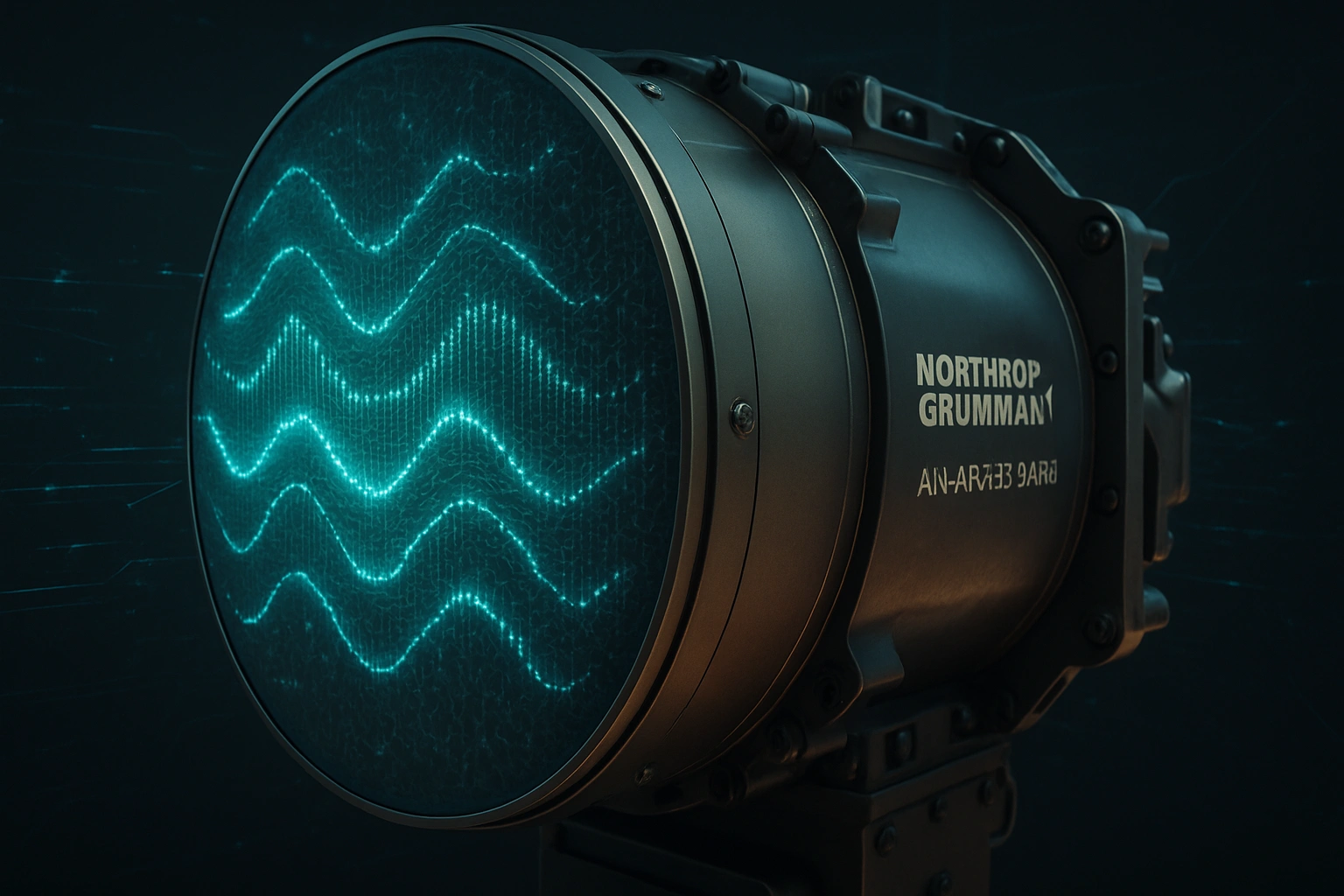
Close-up view of the Northrop Grumman AN/APG-83 SABR AESA radar antenna array showing solid-state transmit/receive modules.

The AN/APG-83 SABR uses Gallium Nitride (GaN) technology to give the F-16 5th-generation sensing capabilities.

158
SHARES
2k
VIEWS
Share on Twitter

A fighter jet is only as lethal as the quality of information it receives. For decades, 4th-generation aircraft were constrained by mechanically scanned radars—plagued by limited range, slow scan times, and high vulnerability to electronic jamming. The emergence of AESA technology has fundamentally changed this dynamic.

The AN/APG-83 Scalable Agile Beam Radar (SABR), developed by Northrop Grumman, is the apex example of this revolution. It is not simply an upgrade—it is a complete rebirth of how legacy fighters see, react, and survive.

READ ALSO

No Content Available

By giving aircraft like the F-16 Block 70 Viper near-F-35 sensor performance, SABR represents one of the most transformative avionics upgrades in modern airpower history.


What Exactly Is AESA and How Does It Work?

To understand why SABR is a game-changer, we need to analyze its engineering foundations. Traditional radars rotate a physical dish to sweep the sky—an architecture inherently limited by inertia and mechanical wear.

AESA (Active Electronically Scanned Array) radars like the APG-83 eliminate mechanical movement entirely. Instead, they rely on hundreds of miniature solid-state Transmit/Receive Modules (TRMs).

The Magic of Beam Steering

Each TRM emits a precisely timed signal. By altering these timings (Phase Shifting), the radar can “steer” the beam electronically at the speed of light. This enables:

  • No mechanical delay: Instantaneous track updates.
  • Multi-tasking: Scanning for aircraft while mapping the ground simultaneously.
  • Agile frequency hopping: Making the radar incredibly hard to jam.

SABR doesn’t just scan the battlespace—it reshapes the electromagnetic environment to its advantage.


Fifth-Generation DNA: Borrowing the Brain of the F-35

The AN/APG-83 SABR is built on the same design principles and software lineage as the F-35’s AN/APG-81 and the F-22’s AN/APG-77.

Northrop Grumman confirms:

  • Up to 70% hardware commonality with the F-35 radar.
  • Up to 95% software commonality.

This shared DNA includes advanced SAR (Synthetic Aperture Radar) algorithms and target recognition models. Essentially, a SABR-equipped F-16 gains “mini-F-35 vision.”

(Curious about the F-35’s own sensor suite? Read our deep dive comparison here.)


The Hidden Engineering Challenges Behind SABR

Upgrading a 1970s airframe with 2020s radar technology is far from trivial. Engineers had to overcome massive physical barriers:

1. Power & Thermal Management

AESA radars are thirsty. They require significantly more power than mechanical sets and generate immense heat. Since the F-16 has a small nose cone and limited cooling capacity, Northrop utilized:

  • Advanced liquid-cooling microchannels.
  • High-efficiency heat conductors.

These innovations prevent the radar from overheating during high-intensity jamming or long-range scanning operations.

2. GaN Electronics — The Real Breakthrough

SABR uses Gallium Nitride (GaN) semiconductors, a major leap beyond the older Gallium Arsenide (GaAs). GaN offers higher power density and thermal tolerance.

Why it matters: GaN allows the radar to pump out more energy (Range) without melting the electronics. It is the secret sauce that lets a tactical radar act like a strategic one.


Operational Impact: See First, Shoot First

With SABR, a 4th-gen fighter can outperform many 4.5-gen competitors. The operational advantages are distinct:

  • See First: Detects low-RCS drones and cruise missiles long before older radars.
  • Shoot First: Provides stable, long-range tracking for AIM-120D AMRAAM missiles.
  • Survive Longer: In dense Electronic Warfare (EW) environments, the radar’s ability to “frequency hop” makes it nearly invisible to enemy Radar Warning Receivers (RWR).

Opportunities & Future Growth

The SABR roadmap suggests it is future-proof, with potential upgrades including:

  1. Cognitive Radar: Using AI/Machine Learning to predict enemy jamming strategies and adapt automatically.
  2. Network Swarming: Allowing multiple F-16s to share radar data, where one jet emits the signal and another receives the reflection (Bistatic Radar).
  3. Passive Modes: Using ambient signals (like TV towers or satellites) to detect targets without emitting any energy.

Conclusion: The F-16’s Eyes Are Now 5th-Gen

The AN/APG-83 SABR is not an incremental upgrade—it is a transformational leap. It solves the greatest weakness of 4th-generation fighters: situational blindness.

By integrating GaN technology and F-35 software architectures, it turns legacy airframes into digitally networked, high-power BVR killers. The era of “old jets with new eyes” has begun—and SABR is leading that revolution.

Tags: AESA RadarDefense EngineeringElectronic WarfareF-16 ModernizationGallium NitrideNorthrop Grumman

Related Posts

No Content Available
Next Post
US Air Force F-35 stealth fighter firing a Raytheon AIM-120D AMRAAM missile from its internal weapons bay during aerial combat.

AIM-120D AMRAAM: The US Air Force’s Long-Range Sniper

Leave a Reply Cancel reply

Your email address will not be published. Required fields are marked *

About

Ultidefense is a digital platform focused on modern defense, military technology, and strategic innovation.
We explore how advancements in aerospace, AI, cybersecurity, and autonomous systems are transforming the global defense landscape.
Our mission is to connect technical insight with strategic awareness, helping readers understand the technologies shaping modern security and warfare.
At Ultidefense, we believe knowledge is strength — and our goal is to deliver clear, factual, and forward-looking analysis on the systems, science, and strategies defining the future of defense.

Categories

  • Comparisons
  • Cyber Security & Electronic Warfare
  • Defense News
  • Defense Systems
    • Air Platforms
      • Attack Helicopters
      • Fighter Jets
      • Global Military Drones: UAV Systems, Autonomy, and Unmanned Warfare
      • Strategic Bombers
    • Future Tech & Innovations
      • Sensors and Avionics
    • Land Systems
      • Artillery & Firepower: Self-Propelled Guns, Rocket Systems, and Barrage Analysis
      • Main Battle Tanks: Armor, Firepower, and Modern MBT Comparisons
    • Missiles & Munitions
      • Strategic & Hypersonic Weapons
    • Space Warfare
      • Military Satellites & ISR
      • Spaceplanes & Launch Vehicles
  • Integrated Defense Systems
    • Air Defense Systems
  • Military Life
  • Naval Systems: Warships, Carriers, and Maritime Defense Technology
    • Aircraft Carriers
    • Submarines
  • Policy, Budget and Geopolitics
  • Unmanned Maritime Systems

Recent Posts

  • Which Military Boot Camp is the Hardest? All 6 US Branches Ranked
  • The SFAS Fallout: What Happens After You Fail Special Forces Selection
  • The Algorithm of War:The Anatomy of Conflict in 2050
  • Russia’s Avangard HGV: Breaking the Shield of Global Missile Defense

Newsletter

Pages

  • About Us
  • Home
  • Contact Us
  • Privacy Policies
  • Terms of Service
  • Disclaimer

© 2025 Defense Systems

Welcome Back!

Login to your account below

Forgotten Password?

Retrieve your password

Please enter your username or email address to reset your password.

Log In
No Result
View All Result
  • Defense Systems
    • Air Platforms
      • Fighter Jets
      • Drones
      • Attack Helicopters
      • Strategic Bombers
    • Land Systems
      • Main Battle Tanks
      • Artillery & Firepower
      • Infantry Fighting Vehicles
      • Military Logistics and Support Vehicles
      • Soldier Systems & Robotics: UGV, Exoskeleton, and Modern Infantry Integration
    • Integrated Defense Systems
      • Ballistic Missile Defense
      • Air Defense Systems
    • Missiles & Munitions
      • Air-to-Air & Anti-Ship Missiles
      • Cruise Missiles
      • Strategic & Hypersonic Weapons
    • Naval
      • Aircraft Carriers
      • Submarines
      • Surface Combatants
      • Unmanned Maritime Systems
    • Future Tech & Innovations
      • Sensors and Avionics
  • Comparisons
  • Space Warfare
    • Counter-Space & ASAT
    • Spaceplanes & Launch Vehicles
    • Military Satellites & ISR
  • Defense News
  • Military Life
  • Policy, Budget and Geopolitics
  • Cyber Security & Electronic Warfare

© 2025 Defense Systems