

• Login
UltiDefense: Military Tech Comparisons & Modern Warfare Analysis
  • Defense Systems
    • Air Platforms
      • Fighter Jets
      • Drones
      • Attack Helicopters
      • Strategic Bombers
    • Land Systems
      • Main Battle Tanks
      • Artillery & Firepower
      • Infantry Fighting Vehicles
      • Military Logistics and Support Vehicles
      • Soldier Systems & Robotics: UGV, Exoskeleton, and Modern Infantry Integration
    • Integrated Defense Systems
      • Ballistic Missile Defense
      • Air Defense Systems
    • Missiles & Munitions
      • Air-to-Air & Anti-Ship Missiles
      • Cruise Missiles
      • Strategic & Hypersonic Weapons
    • Naval
      • Aircraft Carriers
      • Submarines
      • Surface Combatants
      • Unmanned Maritime Systems
    • Future Tech & Innovations
      • Sensors and Avionics
  • Comparisons
  • Space Warfare
    • Counter-Space & ASAT
    • Spaceplanes & Launch Vehicles
    • Military Satellites & ISR
  • Defense News
  • Military Life
  • Policy, Budget and Geopolitics
  • Cyber Security & Electronic Warfare
No Result
View All Result
Defense News
No Result
View All Result

Home - Main Battle Tanks: Armor, Firepower, and Modern MBT Comparisons - M1A2 SEPv3: The Definitive Guide to the US Army’s New Iron Giant

M1A2 SEPv3: The Definitive Guide to the US Army’s New Iron Giant

Matteo Santoro by Matteo Santoro
December 8, 2025
in Main Battle Tanks: Armor, Firepower, and Modern MBT Comparisons
0
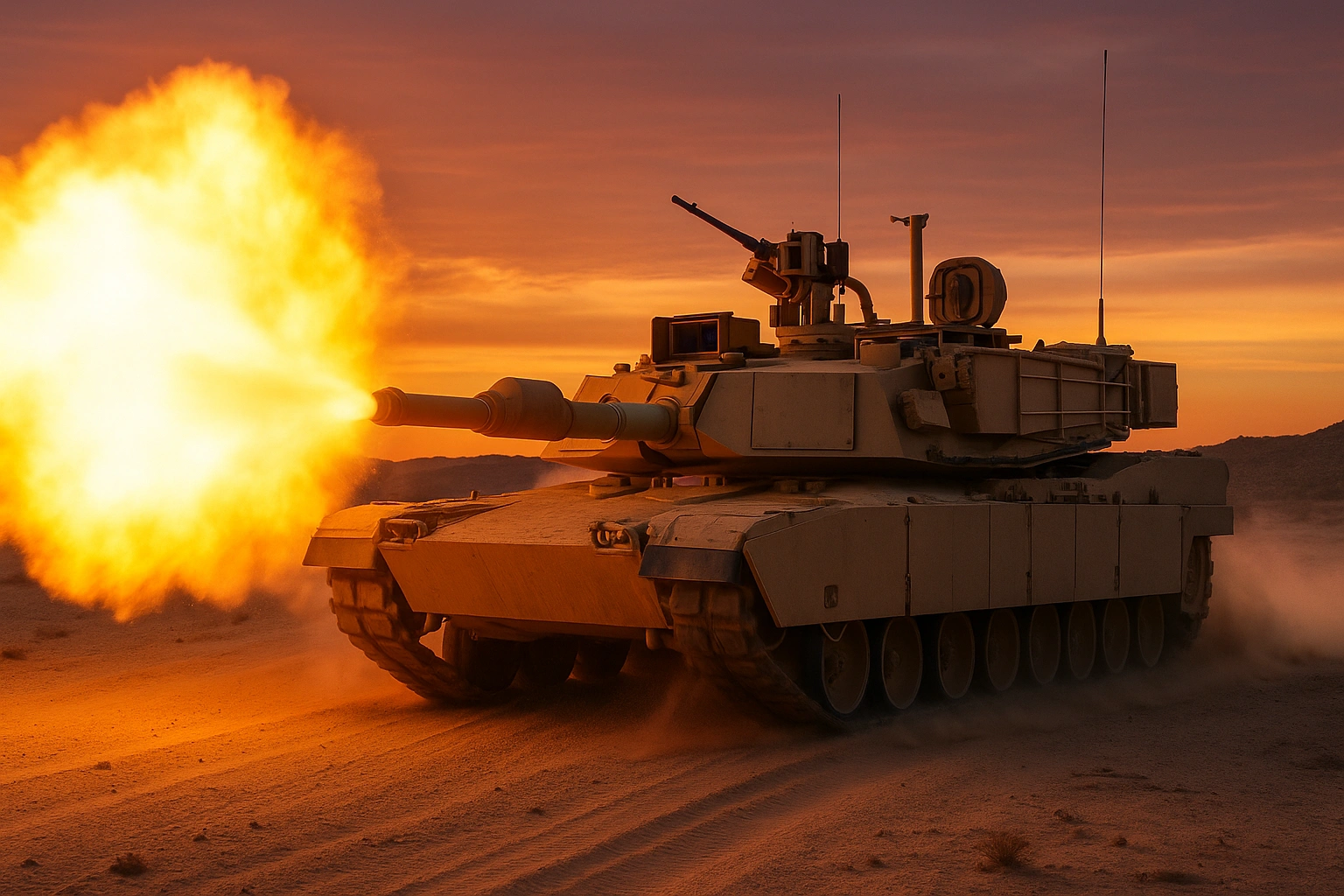
A US Army M1A2 SEPv3 Abrams tank in tan desert camouflage firing its 120mm main gun during a sunset exercise. A massive muzzle flash and dust cloud are visible. The tank's turret is fitted with the Trophy Active Protection System radar panels and countermeasure launchers. Tracks are kicking up sand as the tank moves.

Figure 1: A US Army M1A2 SEPv3 Abrams engages targets during live-fire training. Note the prominent radar panels of the Trophy Active Protection System (APS) on the turret sides, a key feature of the SEPv3 upgrade.

156
SHARES
1.9k
VIEWS
Share on Twitter

The M1A2 SEPv3 (System Enhancement Package v3) is not merely an upgrade; it is a reinvention of the Abrams platform for the high-intensity conflicts of the 2030s. Developed by General Dynamics Land Systems (GDLS), this 73-ton behemoth addresses the critical lessons learned from decades of asymmetric warfare and the renewed threat of peer-level armored combat.

With the Poland M1A2 SEPv3 purchase reshaping NATO’s Eastern Flank, the world is asking: Can this American giant withstand modern anti-tank guided missiles (ATGMs) and loitering munitions? And more importantly, how does it fare in a M1A2 SEPv3 vs T-90M showdown?

READ ALSO

T-90M “Proryv-3”: Paper Tiger or Predator? Real Battlefield Performance Analysis

The Leopard 2A7+: Is This Germany’s Ultimate Apex Predator? (Technical Analysis)

🔍 1. Firepower: The “Smart” Lethality Upgrade

The heart of the SEPv3 remains the combat-proven 120mm M256 smoothbore cannon, but the electronics behind it have been revolutionized.

The XM1147 AMP Revolution

The game-changer is the integration of the Ammunition DataLink (ADL). This allows the tank to fire the XM1147 Advanced Multi-Purpose (AMP) round, which replaces four legacy rounds (HEAT, MPAT, Canister, and Obstacle Reduction). The gunner can program the round instantly for:

  • Airburst Mode: Detonating above dug-in infantry or anti-tank teams.
  • Point Detonate: Maximizing breach capability against walls and bunkers.
  • Delay Mode: Exploding after penetrating a light vehicle or structure.

🛡️ Survivability: The “Unkillable” Tank?

Protection is where the SEPv3 truly separates itself from its predecessors. It moves beyond passive armor into the realm of “active defense.”

Next Generation Armor Package (NGAP)

While specific composition remains classified, NGAP is believed to optimize the heavy Depleted Uranium (DU) mesh within the composite layers. This provides enhanced protection against long-rod kinetic penetrators (APFSDS) while shifting the weight balance to improve handling.

Trophy Active Protection System (APS)

The SEPv3 is designed from the factory to mount the Rafael Trophy APS. This system uses radar to detect incoming RPGs and ATGMs, launching a kinetic countermeasure to neutralize the threat meters away from the hull. It turns the tank into a mobile “Iron Dome.”

⚡ Mobility & Power: Solving the Fuel Crisis

The Abrams has notoriously been a “fuel guzzler” due to its Honeywell AGT1500 Turbine Engine. The SEPv3 addresses this with a critical addition: the Under-Armor Auxiliary Power Unit (APU).

  • Silent Watch Capability: The APU allows the tank to shut down the loud, heat-generating main turbine while keeping all sensors, radios, and the turret active. This drastically reduces the thermal signature, making the tank harder to spot by enemy thermal optics.
  • Logistics Footprint: By reducing idle fuel consumption, the SEPv3 extends its operational range, easing the burden on supply lines.

⚔️ Comparative Analysis: M1A2 SEPv3 vs. Russian T-90M

In a direct confrontation, the design philosophies of East and West collide. Here is how the American heavyweight stacks up against Russia’s premier “Proryv-3” MBT.

Feature🇺🇸 M1A2 SEPv3🇷🇺 T-90M “Proryv-3”
Weight~73.6 Tons (Heavy Protection)~48 Tons (Mobility Focus)
Main Gun120mm M256 (Manual Load)125mm 2A46M-5 (Auto-loader)
SurvivabilitySuperior: Blowout panels + Trophy APSRisk: Ammo in carousel (Jack-in-the-box effect)
Engine1,500 hp Gas Turbine (Quiet)1,130 hp Diesel (V-92S2F)
Situational Awareness3rd Gen FLIR (Hunter-Killer)Kalina Fire Control (Updated)

Tactical Verdict: While the T-90M has a lower profile and is lighter, the M1A2 SEPv3 dominates in crew survivability (“shoot first, survive hit”) and networked warfare capabilities. The lack of blowout panels remains a fatal flaw for the Russian design.

🌍 Strategic Impact: The Polish Wall

The Poland M1A2 SEPv3 purchase (250 units) creates a formidable “armor wall” on NATO’s eastern border. Combined with Poland’s acquisition of South Korean K2 Black Panthers, this fleet represents the most powerful concentration of heavy armor in Europe, designed specifically to counter Russian mechanized divisions.

📌 The Global Armor Rivalry

While the Abrams relies on sheer mass and depleted uranium for dominance, European engineers have taken a different path focusing on modularity and urban agility. How does the German Leopard compare?

👉 Read our full technical breakdown: Leopard 2A7+ vs The World.

❓ FAQ: Common Questions on M1A2 SEPv3

What is the difference between SEPv2 and SEPv3?

The SEPv3 adds the Under-Armor APU, integrates the Trophy APS natively, upgrades the armor to NGAP, and introduces the Ammunition DataLink (ADL) for programmable rounds. SEPv2 lacks these integrated power and lethality management systems.

Does the M1A2 SEPv3 use Depleted Uranium?

Yes. It uses an evolved version of the Heavy Armor package containing Depleted Uranium (DU) mesh, which is extremely dense and effective against kinetic energy penetrators.

What is the “Weight Problem” of the SEPv3?

At nearly 74 tons with combat load and Trophy APS, the SEPv3 challenges logistical infrastructure (bridges, recovery vehicles like the M88A2 Hercules). This is its main trade-off for extreme survivability.
Tags: AGT1500Depleted UraniumGeneral DynamicsLand WarfareM1 AbramsMBTMilitary TechPoland DefenseSepV3Tank WarfareTrophy APSUS Army

Related Posts

A Russian T-90M Proryv-3 Main Battle Tank maneuvering through muddy terrain in Ukraine. The tank is equipped with Relikt Explosive Reactive Armor (ERA) and covered in the Nakidka radar-absorbent camouflage system to reduce thermal signature against drones.
Main Battle Tanks: Armor, Firepower, and Modern MBT Comparisons

T-90M “Proryv-3”: Paper Tiger or Predator? Real Battlefield Performance Analysis

December 8, 2025
A front-view of the German Leopard 2A7+ Main Battle Tank (MBT) maneuvering in desert terrain. The image highlights the Rheinmetall 120mm L55A1 smoothbore gun, modular add-on armor for urban protection, and the FLW 200 remote weapon station on the turret.
Main Battle Tanks: Armor, Firepower, and Modern MBT Comparisons

The Leopard 2A7+: Is This Germany’s Ultimate Apex Predator? (Technical Analysis)

December 8, 2025
Next Post
A Russian T-90M Proryv-3 Main Battle Tank maneuvering through muddy terrain in Ukraine. The tank is equipped with Relikt Explosive Reactive Armor (ERA) and covered in the Nakidka radar-absorbent camouflage system to reduce thermal signature against drones.

T-90M “Proryv-3”: Paper Tiger or Predator? Real Battlefield Performance Analysis

Leave a Reply Cancel reply

Your email address will not be published. Required fields are marked *

About

Ultidefense is a digital platform focused on modern defense, military technology, and strategic innovation.
We explore how advancements in aerospace, AI, cybersecurity, and autonomous systems are transforming the global defense landscape.
Our mission is to connect technical insight with strategic awareness, helping readers understand the technologies shaping modern security and warfare.
At Ultidefense, we believe knowledge is strength — and our goal is to deliver clear, factual, and forward-looking analysis on the systems, science, and strategies defining the future of defense.

Categories

  • Comparisons
  • Cyber Security & Electronic Warfare
  • Defense News
  • Defense Systems
    • Air Platforms
      • Attack Helicopters
      • Fighter Jets
      • Global Military Drones: UAV Systems, Autonomy, and Unmanned Warfare
      • Strategic Bombers
    • Future Tech & Innovations
      • Sensors and Avionics
    • Land Systems
      • Artillery & Firepower: Self-Propelled Guns, Rocket Systems, and Barrage Analysis
      • Main Battle Tanks: Armor, Firepower, and Modern MBT Comparisons
    • Missiles & Munitions
      • Strategic & Hypersonic Weapons
    • Space Warfare
      • Military Satellites & ISR
      • Spaceplanes & Launch Vehicles
  • Integrated Defense Systems
    • Air Defense Systems
  • Military Life
  • Naval Systems: Warships, Carriers, and Maritime Defense Technology
    • Aircraft Carriers
    • Submarines
  • Policy, Budget and Geopolitics
  • Unmanned Maritime Systems

Recent Posts

  • Which Military Boot Camp is the Hardest? All 6 US Branches Ranked
  • The SFAS Fallout: What Happens After You Fail Special Forces Selection
  • The Algorithm of War:The Anatomy of Conflict in 2050
  • Russia’s Avangard HGV: Breaking the Shield of Global Missile Defense

Newsletter

Pages

  • About Us
  • Home
  • Contact Us
  • Privacy Policies
  • Terms of Service
  • Disclaimer

© 2025 Defense Systems

Welcome Back!

Login to your account below

Forgotten Password?

Retrieve your password

Please enter your username or email address to reset your password.

Log In
No Result
View All Result
  • Defense Systems
    • Air Platforms
      • Fighter Jets
      • Drones
      • Attack Helicopters
      • Strategic Bombers
    • Land Systems
      • Main Battle Tanks
      • Artillery & Firepower
      • Infantry Fighting Vehicles
      • Military Logistics and Support Vehicles
      • Soldier Systems & Robotics: UGV, Exoskeleton, and Modern Infantry Integration
    • Integrated Defense Systems
      • Ballistic Missile Defense
      • Air Defense Systems
    • Missiles & Munitions
      • Air-to-Air & Anti-Ship Missiles
      • Cruise Missiles
      • Strategic & Hypersonic Weapons
    • Naval
      • Aircraft Carriers
      • Submarines
      • Surface Combatants
      • Unmanned Maritime Systems
    • Future Tech & Innovations
      • Sensors and Avionics
  • Comparisons
  • Space Warfare
    • Counter-Space & ASAT
    • Spaceplanes & Launch Vehicles
    • Military Satellites & ISR
  • Defense News
  • Military Life
  • Policy, Budget and Geopolitics
  • Cyber Security & Electronic Warfare

© 2025 Defense Systems