
• Login
UltiDefense: Military Tech Comparisons & Modern Warfare Analysis
  • Defense Systems
    • Air Platforms
      • Fighter Jets
      • Drones
      • Attack Helicopters
      • Strategic Bombers
    • Land Systems
      • Main Battle Tanks
      • Artillery & Firepower
      • Infantry Fighting Vehicles
      • Military Logistics and Support Vehicles
      • Soldier Systems & Robotics: UGV, Exoskeleton, and Modern Infantry Integration
    • Integrated Defense Systems
      • Ballistic Missile Defense
      • Air Defense Systems
    • Missiles & Munitions
      • Air-to-Air & Anti-Ship Missiles
      • Cruise Missiles
      • Strategic & Hypersonic Weapons
    • Naval
      • Aircraft Carriers
      • Submarines
      • Surface Combatants
      • Unmanned Maritime Systems
    • Future Tech & Innovations
      • Sensors and Avionics
  • Comparisons
  • Space Warfare
    • Counter-Space & ASAT
    • Spaceplanes & Launch Vehicles
    • Military Satellites & ISR
  • Defense News
  • Military Life
  • Policy, Budget and Geopolitics
  • Cyber Security & Electronic Warfare
No Result
View All Result
Defense News
No Result
View All Result

Home - Global Military Drones: UAV Systems, Autonomy, and Unmanned Warfare - What Are Loitering Munitions? The Rise of “Kamikaze Drones” in Modern Warfare

What Are Loitering Munitions? The Rise of “Kamikaze Drones” in Modern Warfare

George Schouten by George Schouten
November 19, 2025
in Global Military Drones: UAV Systems, Autonomy, and Unmanned Warfare
0
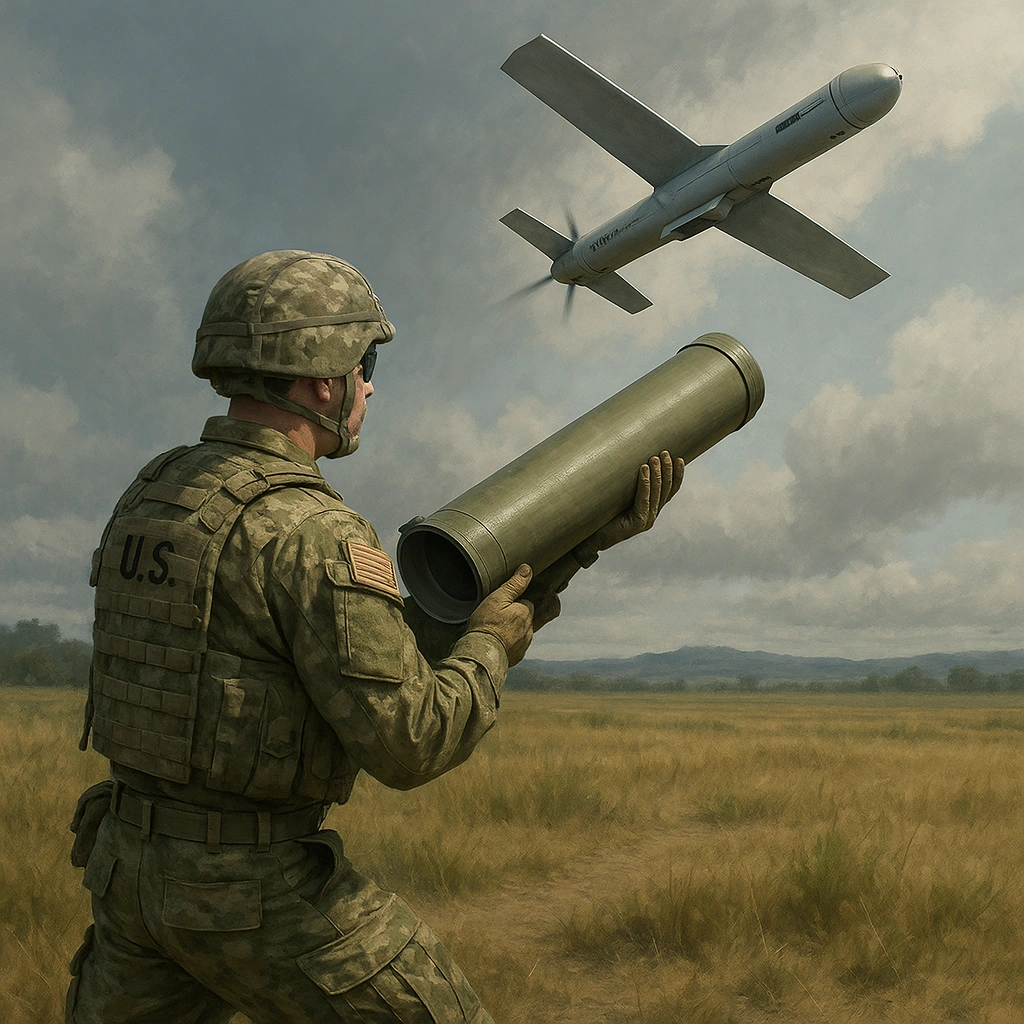
A US soldier preparing to launch a Switchblade 600 loitering munition from a portable tube launcher in a field environment.

The US-made Switchblade 600 represents a new class of man-portable loitering munitions, capable of destroying armored targets after patrolling the air.

157
SHARES
2k
VIEWS
Share on Twitter

They are neither standard missiles nor typical drones. Loitering munitions—often called “suicide drones” or “kamikaze drones”—have fundamentally altered the battlefield equation. From the US-made Switchblade 600 to mass-produced swarms, these patient predators are becoming the must-have asset for modern armies.

In this analysis, we explore how they hunt, why they are cost-effective, and the key systems dominating the global market.

READ ALSO

XQ-58A Valkyrie: The $3 Million “Loyal Wingman” That Changes Everything

Jiutian SS-UAV: China’s Flying Aircraft Carrier (2025 Technical Deep Dive)


What Is a Loitering Munition? (Definition)

A loitering munition is a hybrid precision-strike weapon that combines the endurance of a drone with the lethality of a guided missile. Unlike a traditional missile that flies directly to a target, a loitering munition can:

  • Loiter over a target area for minutes or hours,
  • Search for targets using electro-optical/infrared (EO/IR) sensors,
  • Identify high-value targets in real-time,
  • Dive onto the target, detonating on impact.

This capability fills a crucial niche between cruise missiles and reusable UAVs, allowing forces to engage fleeting or hidden targets without risking manned aircraft.


How Do They Work? The “Search and Destroy” Cycle

Although designs differ by manufacturer, most kamikaze drones follow a distinct four-step operational cycle:

1. Launch

The munition is typically fired from a sealed canister using compressed gas. Platforms range from infantry-portable tubes to vehicle mounts, and even air-launches from “mothership” drones like the MQ-9 Reaper.

2. Loiter / Patrol

Once airborne, the electric motor engages. The drone orbits a designated area silently, streaming live video back to the operator. This “patience” is its greatest weapon.

3. Target Acquisition

Using advanced sensors and often AI-assisted recognition, the system identifies threats (tanks, radar systems, or artillery). In systems like the Switchblade, a human operator remains “in-the-loop” to confirm the target.

4. Precision Strike

Once authorized, the drone enters a terminal dive. If the situation changes (e.g., civilians appear), the operator can “wave off” the strike, sending the drone back to loiter mode.


Key Examples in the US Arsenal

Switchblade Family (AeroVironment)

The gold standard for US forces, developed by AeroVironment.

  • Switchblade 300: A backpackable, anti-personnel system used for precision strikes with low collateral damage. Range: ~10 km.
  • Switchblade 600: The “Tank Killer.” Equipped with an anti-armor warhead based on the Javelin missile technology. It can fly for 40+ minutes and destroy heavy armor at ranges exceeding 40 km.

“The ability to wave off a strike seconds before impact gives American commanders an unprecedented level of ethical control on the battlefield.”

Global Competitors

  • IAI Harop (Israel): A larger, anti-radiation drone designed to hunt enemy radar systems autonomously.
  • ZALA Lancet (Russia): Heavily used in recent conflicts to target artillery and air defense systems.

The Strategic Advantage: Cost vs. Impact

The primary driver behind the rise of kamikaze drones is economics. In modern warfare, cost-exchange ratios matter.

Weapon SystemEstimated CostTarget Value
Javelin Missile~$175,000Main Battle Tank ($4M+)
Switchblade 600Lower than JavelinMain Battle Tank ($4M+)
Small FPV Drone~$500 – $1,000Infantry Fighting Vehicle ($1M+)

This asymmetry forces enemies to use expensive air defense missiles (often costing $500k+) to shoot down cheap drones, bleeding their budget dry.

Conclusion

Loitering munitions are not just a trend; they are the future of tactical combat. With the integration of Artificial Intelligence (AI) and swarm capabilities, systems like the Switchblade 600 will continue to dominate the skies. For US defense strategy, they offer a low-risk, high-reward solution to neutralizing adversaries.

Tags: AeroVironmentAsymmetric WarfareKamikaze DronesMilitary TechnologyPrecision StrikeSmart WeaponsSwitchblade 600

Related Posts

F-35 Lightning II flying with XQ-58A Valkyrie loyal wingman drones.
Global Military Drones: UAV Systems, Autonomy, and Unmanned Warfare

XQ-58A Valkyrie: The $3 Million “Loyal Wingman” That Changes Everything

December 19, 2025
China's massive Jiutian SS-UAV deploying a swarm of smaller drones from its central mission bay
Global Military Drones: UAV Systems, Autonomy, and Unmanned Warfare

Jiutian SS-UAV: China’s Flying Aircraft Carrier (2025 Technical Deep Dive)

December 11, 2025
US Navy MQ-4C Triton drone flying high altitude surveillance mission over the ocean
Global Military Drones: UAV Systems, Autonomy, and Unmanned Warfare

MQ-4C Triton: The Ocean’s All-Seeing Eye

December 11, 2025
Next Post
Concept art of the USAF NGAD 6th generation fighter jet flying alongside autonomous drone wingmen.

What Is NGAD? Inside the USAF’s Secret 6th Generation Fighter Program

Leave a Reply Cancel reply

Your email address will not be published. Required fields are marked *

About

Ultidefense is a digital platform focused on modern defense, military technology, and strategic innovation.
We explore how advancements in aerospace, AI, cybersecurity, and autonomous systems are transforming the global defense landscape.
Our mission is to connect technical insight with strategic awareness, helping readers understand the technologies shaping modern security and warfare.
At Ultidefense, we believe knowledge is strength — and our goal is to deliver clear, factual, and forward-looking analysis on the systems, science, and strategies defining the future of defense.

Categories

  • Comparisons
  • Cyber Security & Electronic Warfare
  • Defense News
  • Defense Systems
    • Air Platforms
      • Attack Helicopters
      • Fighter Jets
      • Global Military Drones: UAV Systems, Autonomy, and Unmanned Warfare
      • Strategic Bombers
    • Future Tech & Innovations
      • Sensors and Avionics
    • Land Systems
      • Artillery & Firepower: Self-Propelled Guns, Rocket Systems, and Barrage Analysis
      • Main Battle Tanks: Armor, Firepower, and Modern MBT Comparisons
    • Missiles & Munitions
      • Strategic & Hypersonic Weapons
    • Space Warfare
      • Military Satellites & ISR
      • Spaceplanes & Launch Vehicles
  • Integrated Defense Systems
    • Air Defense Systems
  • Military Life
    • Combat Survival & Medicine
  • Naval Systems: Warships, Carriers, and Maritime Defense Technology
    • Aircraft Carriers
    • Submarines
  • Policy, Budget and Geopolitics
  • Unmanned Maritime Systems

Recent Posts

  • Off-Earth Rare Earth Elements Mining: Moon, Mars and Asteroids as Strategic Military Resources
  • What Actually Kills Soldiers on the Battlefield?
  • Which Military Boot Camp is the Hardest? All 6 US Branches Ranked
  • The SFAS Fallout: What Happens After You Fail Special Forces Selection

Newsletter

Pages

  • About Us
  • Home
  • Contact Us
  • Privacy Policies
  • Terms of Service
  • Disclaimer

© 2025 Defense Systems

Welcome Back!

Login to your account below

Forgotten Password?

Retrieve your password

Please enter your username or email address to reset your password.

Log In
No Result
View All Result
  • Defense Systems
    • Air Platforms
      • Fighter Jets
      • Drones
      • Attack Helicopters
      • Strategic Bombers
    • Land Systems
      • Main Battle Tanks
      • Artillery & Firepower
      • Infantry Fighting Vehicles
      • Military Logistics and Support Vehicles
      • Soldier Systems & Robotics: UGV, Exoskeleton, and Modern Infantry Integration
    • Integrated Defense Systems
      • Ballistic Missile Defense
      • Air Defense Systems
    • Missiles & Munitions
      • Air-to-Air & Anti-Ship Missiles
      • Cruise Missiles
      • Strategic & Hypersonic Weapons
    • Naval
      • Aircraft Carriers
      • Submarines
      • Surface Combatants
      • Unmanned Maritime Systems
    • Future Tech & Innovations
      • Sensors and Avionics
  • Comparisons
  • Space Warfare
    • Counter-Space & ASAT
    • Spaceplanes & Launch Vehicles
    • Military Satellites & ISR
  • Defense News
  • Military Life
  • Policy, Budget and Geopolitics
  • Cyber Security & Electronic Warfare

© 2025 Defense Systems