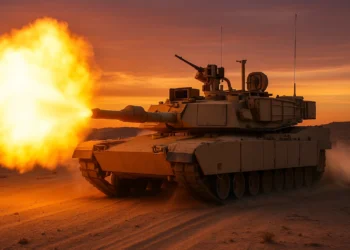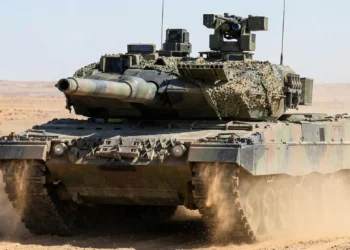


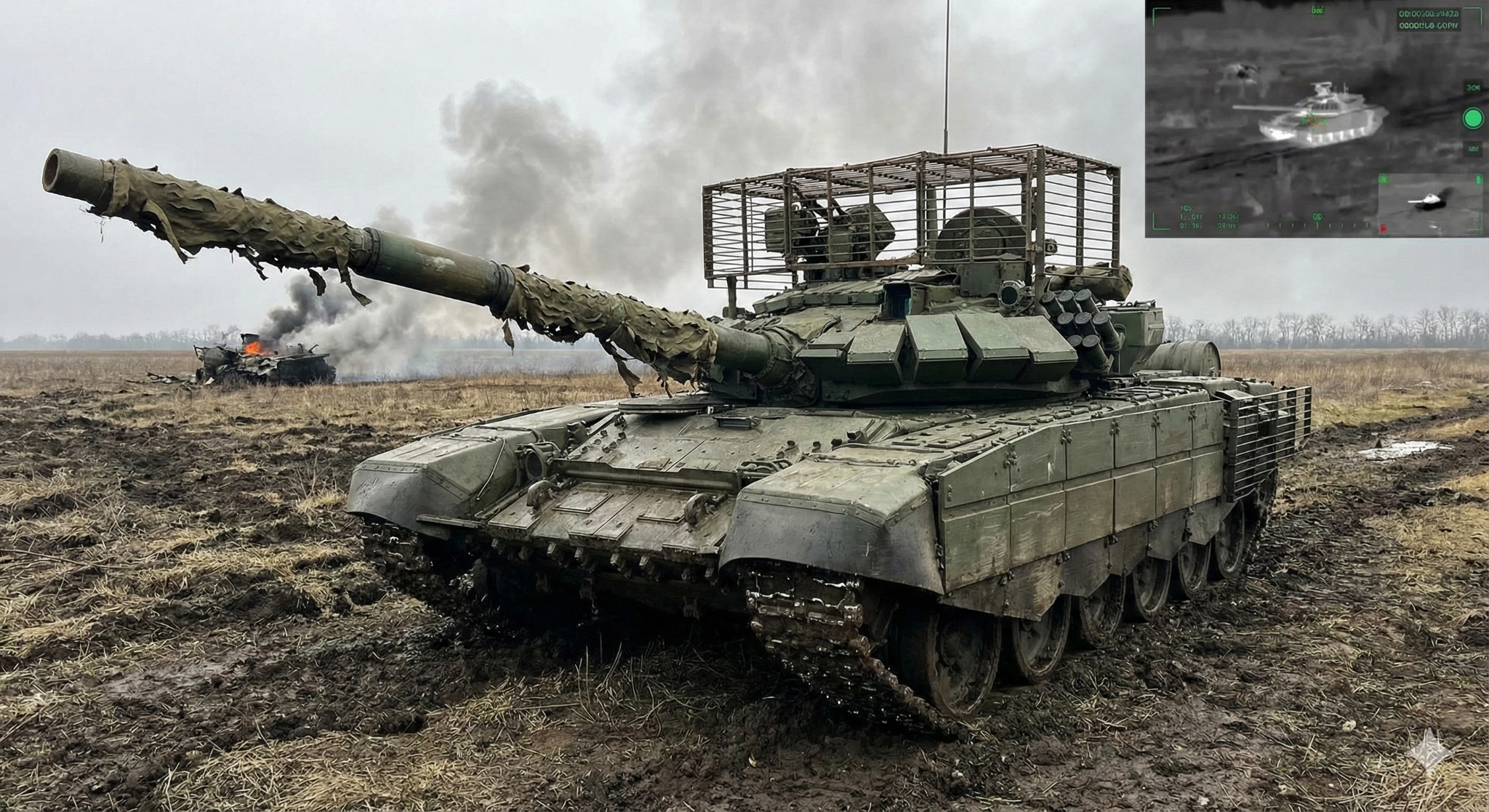
The T-90M “Proryv-3” (Breakthrough-3) is not just a tank; it is the Kremlin’s armored flagship. Designed by Uralvagonzavod, it was marketed to the world as the definitive answer to NATO’s heavyweights, boasting superior mobility, the advanced Relikt ERA, and a modernized digital core. With global military eyes fixed on T-90M Proryv-3 specs, it stands as the most debated platform of the decade.
However, the brutal reality of the Ukraine War has peeled back the layers of propaganda. Is the T-90M truly a peer to the Leopard 2A7+ and M1A2 SEPv3, or is it merely a modernized coffin?
🔍 1. Firepower: The “Long Arm” of Russia
On paper, the T-90M is undeniably lethal. It retains the upgraded 2A46M-5 125mm smoothbore gun, which corrects the accuracy issues of previous Soviet guns.
- Guided Lethality: Unlike most NATO tanks, the T-90M can fire the 9M119M Refleks (AT-11 Sniper) anti-tank guided missile directly from the barrel, engaging targets out to 5km—well beyond the effective range of standard kinetic rounds.
- Ammo Variety: It fields the new 3BM69 “Vacuum-1” APFSDS rounds, designed to penetrate modern composite armor, though these are rarely seen in large numbers due to manufacturing costs.
Does T-90M have an autoloader?
Yes. The T-90M relies on the traditional Soviet-style automatic carousel loader located beneath the turret crew. While this allows for a compact profile and a 3-man crew, it remains the tank’s Achilles’ heel.
🛡️ Protection: Relikt ERA vs. Modern Threats
The most visible upgrade is the Relikt Explosive Reactive Armor (ERA). Unlike the older Kontakt-5, Relikt uses dual-flyer plates to defeat both tandem-charge warheads (like older RPGs) and, to a lesser extent, kinetic penetrators.
The “Nakidka” Cloak
Russian media heavily promoted the Nakidka camouflage system—a radar-absorbent material draped over the tank to reduce its thermal and radar signature. While effective against older sensors, battlefield evidence confirms that high-end thermal optics (like those on the M1A2 SEPv3) and Javelin missiles can still lock onto T-90Ms equipped with Nakidka.
💥 The Fatal Flaw: The “Jack-in-the-Box” Effect
Despite a new turret bustle that stores some spare ammunition with blowout panels, the primary ammo carousel remains in the hull, right under the crew’s feet.
T-90M jack-in-the-box effect explained: When a penetrator breaches the hull armor, it ignites the exposed propellant charges in the carousel. The resulting overpressure instantly detaches the turret, launching it dozens of meters into the air.
“While the T-90M features advanced Relikt armor, it still retains the infamous autoloader carousel design, creating a critical vulnerability known as the ‘Jack-in-the-box’ effect. Unlike the M1A2 SEPv3 with its blowout panels, a direct hit to a T-90M often proves catastrophic for the crew.”
🚜 Mobility: The Tactical Nightmare of “Reverse Speed”
Perhaps the most shocking revelation for Western analysts has been the T-90M’s transmission. While it has a respectable 1,130 hp V-92S2F engine, it suffers from a fatal legacy design.
T-90M reverse speed limitations: The transmission allows for a pitiful 4 km/h reverse speed. In urban combat, this is a death sentence.
- The Scenario: A T-90M fires and needs to retreat (“shoot and scoot”).
- The Reality: It cannot reverse fast enough to escape return fire. The driver is forced to turn the tank around, exposing the weaker rear armor to the enemy.
🧠 Digital Systems: The Sanctions Effect on “Kalina”
The Kalina Fire Control System was supposed to bring Russia into the digital age with hunter-killer capabilities and advanced thermal sights. However, post-2022 sanctions have choked the supply of French Thales matrixes.
Current production T-90Ms utilize domestic thermal sights (PNM-T), which reportedly suffer from lower resolution and “ghosting” compared to Western 3rd Gen FLIR, giving NATO tanks a “first look, first shot” advantage at night.
⚔️ Comparative Analysis: T-90M vs. The West
| Feature | 🇷🇺 T-90M Proryv-3 | 🇺🇸 M1A2 SEPv3 | 🇩🇪 Leopard 2A7+ |
|---|---|---|---|
| Combat Weight | 48 Tons | ~73 Tons | ~67 Tons |
| Crew Survivability | Low (Carousel Risk) | High (Blowout Panels) | High (Bustle Storage) |
| Reverse Speed | ~4 km/h (Critical Flaw) | ~40 km/h | ~31 km/h |
| Main Gun | 125mm (Auto-loader) | 120mm (Manual) | 120mm L55A1 (Manual) |
🌍 Field Verdict: T-90M Performance in Ukraine
The T-90M is better than any T-72, but it is not invincible. Over 100 visually confirmed losses prove that:
- Drones are King: “Cope Cages” (slat armor) have largely failed to stop FPV drones from hitting the engine deck or turret ring.
- Mobility Kills: Once immobilized (often due to mine damage), the crew abandons the tank immediately, fearing an ammo cook-off.
- Optics Vulnerability: External sensors are fragile and easily stripped by artillery shrapnel, blinding the “modern” tank.
For a direct comparison with Germany’s finest engineering, read our full breakdown:
👉 Leopard 2A7+: Germany’s Premier MBT vs Russian Armor
❓ FAQ: Common Questions
Is the T-90M better than the Abrams?
In terms of weight and strategic mobility (crossing bridges), the T-90M wins. In a head-to-head duel, the Abrams’ superior optics, reverse speed, and crew survivability give it a decisive edge.
What is the difference between T-90A and T-90M?
The T-90M adds the new welded turret with bustle storage (for spare rounds), Relikt ERA (instead of Kontakt-5), the Kalina FCS, and a more powerful 1,130 hp engine. It is a massive leap over the T-90A.